
Porsche Models without Bore Scoring

Porsche Models without Bore Scoring
Introduction: The Evolution of Porsche Cylinder Bores
Bore scoring has become a well-known Achilles’ heel in certain generations of Porsche engines, particularly those utilizing Lokasil and Alusil high-silicon aluminum block technologies. These early lightweight designs offered performance advantages over traditional cast iron liners but came at the cost of long-term durability—especially when paired with suboptimal maintenance or piston design flaws. The result? Thousands of premature engine failures due to deep gouges in the cylinder walls.
To overcome these challenges, Porsche transitioned to more advanced cylinder bore surface treatments that retain the thermal conductivity and weight savings of aluminum while dramatically improving wear resistance and oil control. Chief among these modern technologies are Nikasil, APS (Atmospheric Plasma Spray), and PTWA (Plasma Transferred Wire Arc) coatings. These ultra-thin, high-performance iron-based coatings are not only superior to conventional liners in thermal and mechanical properties but are also virtually immune to bore scoring when properly maintained.
Used in legendary engines like the Mezger flat-six and newer Porsche powerplants from the 991.2 generation onward, these coatings represent a major leap forward in engine longevity and performance. For buyers concerned about bore scoring, models equipped with these modern bore technologies are the safest and most durable options in the used Porsche marketplace.
While bore scoring is often associated with the M96 and M97 engines found in early water-cooled Porsche 911, Boxster, and Cayman models, the issue is broader than many realize. To review, the engines most susceptible to bore scoring are:
911 Carrera (996 & 997.1) – 1999 to 2008
Especially models with the 3.6L and 3.8L engines. The 3.4L 996 is less commonly affected, but not immune.
Boxster & Cayman (986 & 987) – 2000 to 2008
Primarily the late 3.4L “S” variants. The base 2.5L, 2.7L, and 3.2L engines are rarely affected.
Panamera, Cayenne, and Macan – Various model years
These models use V6 and V8 engines derived from the same family of high-silicon aluminum block technologies (Alusil), and bore scoring has been reported, particularly in earlier V8 models of the Cayenne and later V6 and V8 Panamera and Macan models, with exception of models with VW sourced VR6 and 2.0T four cylinder engines.
European and Other Makes
Bore scoring isn’t exclusive to Porsche. Any engine using hypereutectic aluminum blocks can be susceptible, including engines from BMW, Audi, and Mercedes-Benz with similar silicon-alloy cylinder bore technologies.
Ultimately, the risk is highest in cars that see a combination of infrequent oil changes, short trips, cold starts, excessive idling, aging of plastic components, and deterioration of the fuel system accelerated by ethanol enriched fuels—all of which promote fuel wash and scoring. Careful pre-purchase inspection and following a severe service maintenance program including used oil analysis remain the best defenses.
Porsche Models without Cylinder Bore Scoring
- 2016 Porsche 911 Carrera (991.2) uses PTWA coating for its cylinder bores.
- 2017 Porsche Panamera Turbo (971) features APS (SUMEbore) coated cylinder bores.
- 2019 Porsche Cayenne Turbo (9Y0) uses APS (SUMEbore) bore coating technology.
- 2019 Porsche Macan Turbo and GTS models utilize APS (SUMEbore) cylinder coating.
- 2017 Porsche Panamera GTS benefits from APS (SUMEbore) coated bores.
- 2019 Porsche Macan S uses the EA839 V6 with pressed-in cast iron liners.
- 2019 Porsche Panamera 4 is powered by the EA839 V6 with iron liners.
- 2019 Porsche Cayenne Base model employs the EA839 V6 with thin-wall iron sleeves.
- 2016 Porsche 718 Boxster and Cayman (all variants) use PTWA bore coating.
- 2014 Porsche Macan Base models use iron-block VW/Audi 2.0T engines.
The Mezger Engine: A Gold Standard in Porsche Durability
Often heralded as the holy grail of modern Porsche engines, the Mezger-designed flat-six stands in stark contrast to the M96/M97 family when it comes to long-term reliability and engineering robustness. Derived from Porsche’s motorsport lineage and originally developed for endurance racing, the Mezger engine was used in 996 and 997 Turbo, 996 and 997 GT2, and 996 and 997 GT3 models:
- 2001–2005 Porsche 911 Turbo (996) uses the Mezger engine with Nikasil-coated cylinder bores.
- 2002–2005 Porsche 911 GT2 (996) features the Mezger engine with Nikasil-plated bores.
- 1999–2005 Porsche 911 GT3 (996) is equipped with the Mezger engine and Nikasil bores.
- 2006–2009 Porsche 911 Turbo (997.1) continues with the Mezger engine and Nikasil coating.
- 2007–2009 Porsche 911 GT2 (997.1) uses the Mezger engine with Nikasil-lined cylinders.
- 2007–2011 Porsche 911 GT3 and GT3 RS (997.1 and 997.2) retain the Mezger engine with Nikasil bores.
Unlike the M96/M97, the Mezger engine features:
- Robust oiling system with true dry sump scavenging.
- No intermediate shaft bearing issues due to its different IMS design.
- No reported cases of bore scoring thanks to Nikasil-plated cylinders.
For those seeking a water-cooled Porsche with the bulletproof reputation of the air-cooled era, Mezger-powered cars are the benchmark. They command a price premium for a reason: their engineering pedigree, motorsport roots, and track record for longevity make them one of the safest bets in the Porsche world.
The Shift to Modern Bore Coatings: How Porsche Solved the Bore Scoring Problem
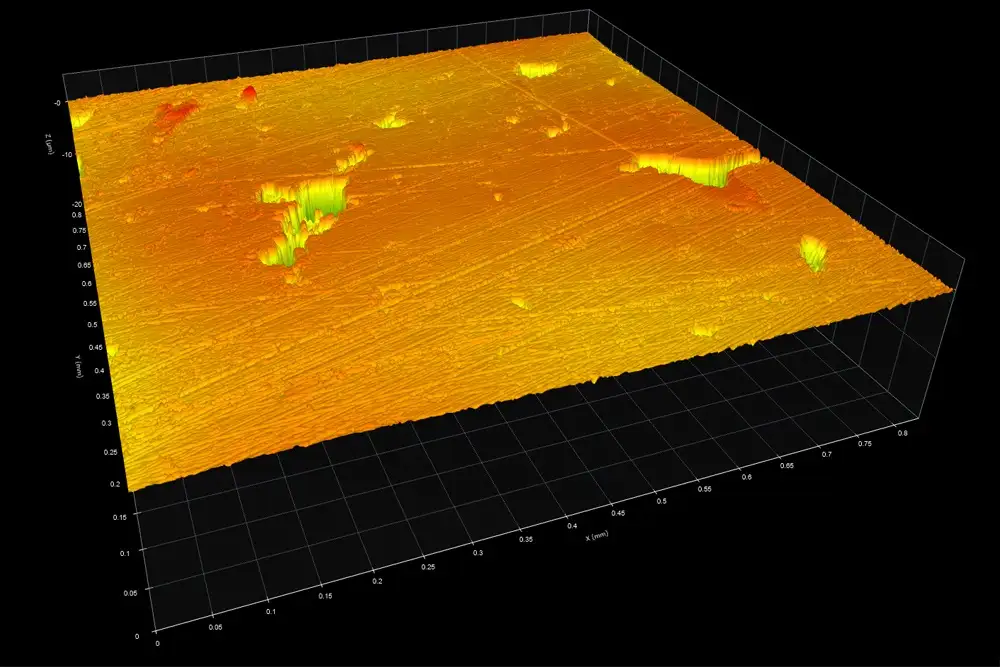
To combat the bore scoring issues that plagued earlier Alusil and Lokasil engines, Porsche adopted two advanced bore coating technologies—Plasma Transferred Wire Arc (PTWA) and Atmospheric Plasma Spray (APS). These coatings represent a major leap forward in cylinder bore durability and are now standard in many high-performance and mainstream Porsche engines.
While bore scoring plagued earlier generations of Porsche engines with Alusil and Lokasil bores, significant strides have been made with the adoption of advanced iron-based spray coatings—APS (Atmospheric Plasma Spray) and PTWA (Plasma Transferred Wire Arc). These technologies enabled Porsche to retain the lightweight benefits of aluminum engine blocks while achieving the wear resistance and durability of iron bores, effectively eliminating bore scoring in modern engines. For instance:
PTWA (Plasma Transfer Wire Arc)is used in Porsche’s newer flat-six engines, beginning with the 991.2 911 (2016 ) and 718 Boxster/Cayman models.Honed example of a PTWA plasma coated bore shown at right.
APS (SUMEbore) coatings are featured in high-performance VW/Audi-derived engines, starting with the EA825 4.0L twin-turbo V8 introduced in the 2017 Panamera Turbo (971). This same engine architecture was later used in the 2019 Cayenne Turbo (9Y0), Panamera GTS, Macan GTS/Turbo, and various Audi RS and S models.
EA839 V6 engines found in 2019 Macan S, Panamera 4, and Cayenne Base models also moved away from Alusil by incorporating pressed-in cast iron liners, further enhancing bore durability.
These thin-wall coatings and liners—typically around 0.15 mm in thickness—offer excellent thermal conductivity, high wear resistance, and better oil control. Porsche has publicly cited up to 90% reduction in cylinder wear at top and bottom dead center, and 50% lower oil consumption compared to older Alusil-based V8 engines.
In short: If you’re considering a 2017 or newer Porsche, especially from the Panamera, Cayenne, or Macan lineup, bore scoring is no longer the concern it once was. Thanks to modern coating technologies and engine architecture updates, Porsche has engineered the problem out of existence.
The Hidden Hero: Why Piston Skirt Coatings Matter in Bore Longevity
One overlooked but critical element in the bore scoring discussion is piston skirt coatings. In Alusil and Lokasil engines, uncoated aluminum pistons would quickly seize or wear due to direct contact with etched silicon surfaces. To combat this, manufacturers like Mahle developed ferrous coatings for piston skirts—most notably Ferrostan and Ferroprint.
– Ferrostan was an electroplated iron-tin coating, common in 1990s-era engines. While effective, it relied on toxic chemicals, prompting its phase-out.
– Ferroprint, introduced in the early 2000s, is a stainless-steel particle/resin composite coating that delivers similar tribological benefits without environmental drawbacks.
These coatings are not interchangeable: worn or flaking coatings (particularly iron layers on forged pistons used in M96/M97) have been shown to initiate scoring. LN Engineering’s research suggests the transition from cast aluminum pistons with more durable Ferrostan platings to forged pistons with Ferroprint coatings likely contributed to bore failure in later engines. Inadequate coating adhesion or wear resistance turns the piston into a direct abrasive agent against the silicon-rich bore, once there is aluminum to aluminum contact.
Thankfully neither Ferrostan or Ferroprint are required for use on Nikasil, PTWA, APS, or iron cylinder bores and a simple anti-friction coating is used on these pistons, which is sacrificial and won’t negatively affect the engine if it wears through down to bare aluminum.
Understanding PTWA and APS Coatings: Porsche’s Modern Solution to Bore Scoring
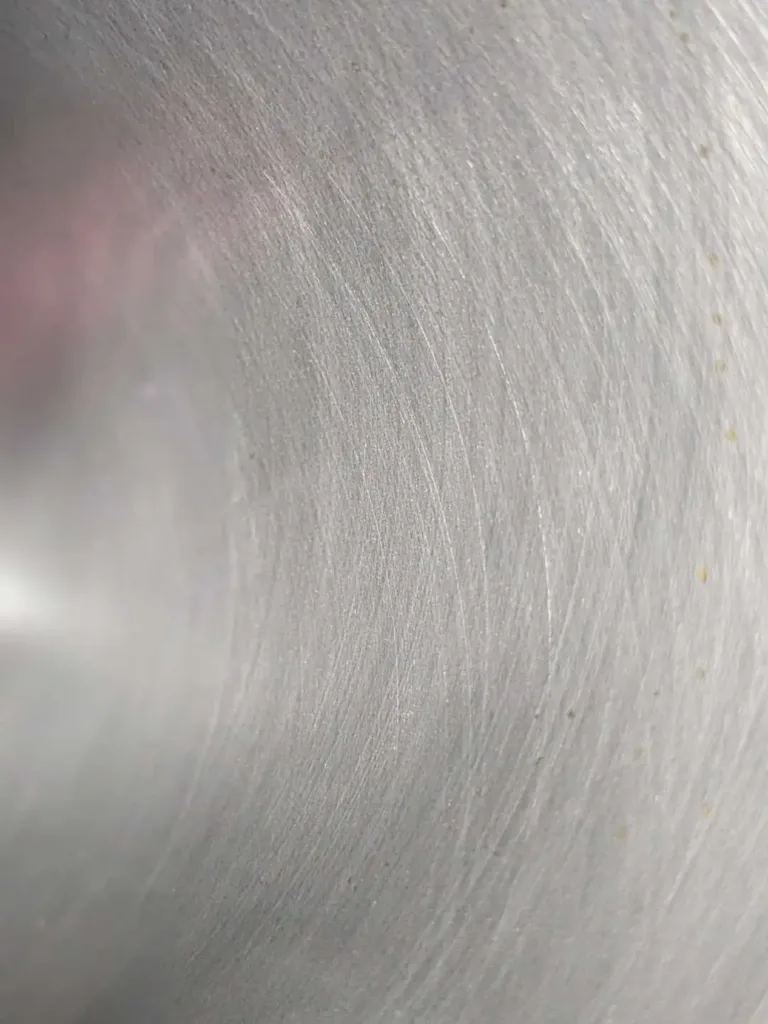
PTWA (Plasma Transferred Wire Arc) is a thermal spray process that uses a single-wire feedstock—typically iron-based—that is melted by a plasma arc and atomized onto the cylinder wall at high velocity. The result is a thin, wear-resistant iron coating, typically 0.15 mm thick, that is bonded directly to the aluminum substrate. PTWA offers superior oil retention, reduced friction, and excellent thermal conductivity. This technology is used in modern Porsche flat-six engines, starting with the 991.2 911 and continuing in the 718 Boxster and Cayman models.
APS (Atmospheric Plasma Spray), often marketed by Oerlikon as SUMEbore, is a similar process used predominantly in Porsche’s V6 and V8 engines sourced from the VW/Audi group. APS coatings are plasma-sprayed directly onto the aluminum bore using powdered feedstock, forming a porous, highly wear-resistant layer that promotes oil adhesion and reduces cylinder wear. Introduced with the 2017 Panamera Turbo (971) and found in newer Cayenne, Macan, and Audi RS engines, APS has proven to cut cylinder wear by up to 90% compared to Alusil.
Both technologies retain the lightweight performance benefits of aluminum engine blocks while achieving iron-like durability without the drawbacks of cast-in sleeves. They also allow for tighter piston-to-wall clearances and better oil control, which translates to lower oil consumption, longer engine life, and improved efficiency.In short, PTWA and APS coatings have effectively solved the bore scoring issues that once troubled Porsche’s aluminum-block engines—making newer models far more robust and reliable for long-term ownership.