
IMS Bearing Kits

Porsche IMS Bearings: The Definitive Guide & FAQ
Porsche IMS Bearing Problems, Failure, Replacement & Solutions
All Porsche Boxster, Cayman, and 911 996 and 997 models from 1997 through 2008 equipped with an M96 or M97 engine use an intermediate shaft (IMS) supported at one end by a sealed ball bearing. Porsche intended this IMS bearing to last the life of the engine and did not specify a service interval or offer the bearing as a replacement part.
When IMS bearing failures became a concern, there was originally no factory procedure for replacing the bearing by itself. LN Engineering and Flat 6 Innovations pioneered the IMS Retrofit procedure, developing the tools and methods required to replace the original bearing without disassembling the engine. IMS Retrofit options include upgraded ceramic-hybrid ball bearings, while the later IMS Solution eliminates the ball bearing entirely and converts the IMS to a pressure-fed plain bearing for a permanent solution.
This Definitive Guide and FAQ explains everything you need to know about Porsche IMS bearings, including which Boxster, Cayman, 996, and 997 models are affected, the differences between the various IMS bearing designs, common failure modes and symptoms, how to determine which bearing your Porsche has, and the available options for addressing the IMS bearing.
The video above provides a good foundation for understanding what the Porsche intermediate shaft and IMS bearing do, where the bearing is located, and why the different IMS bearing designs matter. The next step is determining how those differences apply to your Porsche—and what, if anything, you should do about its IMS bearing.
The key points below summarize the most important facts before we get into the details.
In This Guide
- What is the Porsche IMS bearing problem?
- Which Porsche models and years have IMS bearing problems?
- When should the Porsche IMS bearing be replaced?
- What are the Porsche IMS bearing replacement options?
- What happens when the Porsche IMS bearing fails?
- What are the symptoms of IMS bearing failure?
- How much does Porsche IMS bearing replacement cost?
- Which IMS bearing does my Porsche have?
- Do Porsche 997 and 987 models have IMS bearing problems?
- What should I do with the larger non-serviceable 2006–2008 IMS bearing?
- Does an IMS bearing need a direct oil feed?
- Ball bearing vs. roller bearing for Porsche IMS
- Porsche IMS bearing service intervals
12 Facts You Should Know About Porsche IMS Bearings
Short on time? Here are 12 important facts about Porsche IMS bearings, including failure rates, serviceability, replacement options, lubrication, and the differences between the IMS Retrofit and IMS Solution.
Fact 1. The Porsche IMS Bearing Was the Subject of a Class-Action Lawsuit
The Porsche IMS bearing was the subject of the Eisen class-action lawsuit, which was eventually settled with Porsche. The lawsuit covered certain Porsche Boxster 986, 911 996, and early 911 997 models equipped with the problematic single-row IMS bearing.
Fact 2. What Is the Porsche IMS Bearing Failure Rate?
At the time of the Eisen class-action lawsuit, an IMS bearing failure rate of approximately 8% was reported for the single-row bearing, compared with approximately 1% for the earlier dual-row bearing.
These figures should not be interpreted to mean that an IMS bearing becomes less likely to fail simply because it has survived this long. These vehicles and their original bearings are now decades old. Where the IMS bearing is serviceable, it should be treated as a wear item and replaced as part of preventative maintenance rather than assuming that an original bearing that has survived to date will continue to do so indefinitely.
Fact 3. Why Did Porsche Use a Ball Bearing for the IMS?
A ball bearing is well suited to the IMS application because it can accommodate both radial and axial (thrust) loads. A conventional cylindrical roller bearing has greater limitations when subjected to thrust loads and typically requires another means of controlling axial movement.
This is why bearing type alone does not determine whether an IMS replacement is appropriate for the application. The bearing must be designed to accommodate the actual radial and thrust loads encountered by the intermediate shaft.
Fact 4. Which Porsche IMS Bearings Are Not Serviceable?
2006–2008 Porsche 911 997.1, Boxster 987.1, and Cayman 987.1 models are fitted with the larger, non-serviceable IMS bearing. Unlike the earlier serviceable IMS bearings, this larger bearing cannot be replaced externally. Replacement requires complete engine disassembly.
Because 2005 was a transition year, model year alone should not be used to determine which IMS bearing is installed in a particular engine.
Fact 5. Replacement Engines May Have a Different IMS Bearing
Do not assume which IMS bearing your Porsche has based solely on the vehicle’s model year. Porsche factory replacement engines generally incorporated the IMS design being used when the replacement engine was manufactured rather than necessarily retaining the bearing originally fitted to the vehicle.
For example, a factory replacement engine manufactured in or after model year 2006 may have the larger, non-serviceable IMS bearing even when installed in an earlier Porsche. When the engine’s history is uncertain, the actual IMS configuration should be verified.
Fact 6. Porsche Eventually Offered Its Own IMS Bearing Replacement
In 2017, Porsche introduced its own replacement kit for the failure-prone single-row IMS bearing—almost a decade after the introduction of the IMS Retrofit. Porsche’s replacement also utilized a ceramic-hybrid ball bearing, similar in concept to the bearing technology already used in the IMS Retrofit.
Fact 7. Can You Replace an IMS Bearing After It Has Failed?
An IMS bearing replacement is a preventative procedure, not a repair for an engine that has already suffered an IMS bearing failure.
Once the bearing fails, the intermediate shaft itself may be damaged and ferrous bearing debris can circulate throughout the engine. Installing a replacement bearing does not address this contamination or any resulting internal engine damage. An engine that has experienced an IMS bearing failure must therefore be evaluated differently from an otherwise healthy engine receiving a preventative IMS replacement.
Fact 8. How Do Ball and Roller IMS Bearings Compare?
The dual-row intermediate shaft bearings used in the patented Single Row Pro and Classic Dual Row IMS Retrofit have load ratings comparable to similarly sized cylindrical roller bearings.
The cylindrical roller bearing used in the RND RS Roller IMS Retrofit is specifically designed to accommodate thrust loads in both directions, unlike conventional cylindrical roller bearings that are not designed for significant bidirectional thrust loading. This makes it suitable for use as an IMS bearing replacement.
Claims that a cylindrical roller IMS bearing inherently provides five times or greater load capacity should be evaluated carefully because bearing load capacity alone does not account for the complete combination of radial and axial loads present in the IMS application.*
Fact 9. Does an IMS Bearing Need a Direct Oil Feed?
The Porsche M96/M97 engine uses a wet-sump lubrication system. The intermediate shaft is exposed to oil in the engine sump, allowing an open ball or roller IMS bearing—with its original grease seals removed—to be lubricated by engine oil.
A separate forced-oil or direct-oil feed is therefore not required to lubricate an appropriately configured open ball or roller IMS bearing. Ceramic-hybrid ball bearings also require relatively little oil for proper lubrication; the ceramic-hybrid bearing used in the IMS Retrofit requires approximately 1 cc of oil per minute under normal operating conditions.
Fact 10. How Is the IMS Solution Different From an IMS Retrofit?
The IMS Retrofit replaces the original factory bearing with an upgraded serviceable bearing. The IMS Solution takes a fundamentally different approach by eliminating the ball bearing altogether.
The IMS Solution converts the intermediate shaft to an oil-pressure-fed plain bearing, similar in principle to the plain intermediate shaft bearings used in aircooled and watercooled Mezger Porsche engines. With no balls, races, or cages, there are no rolling bearing components to fail.
The IMS Solution uses a patented spin-on oil filter adapter and external oil line to supply filtered, pressurized engine oil to the plain bearing. It should not be confused with a direct oil feed (DOF), which supplies oil to a conventional ball bearing rather than replacing the ball bearing with a pressure-fed plain bearing.
Fact 11. More Than 40,000 IMS Retrofit and IMS Solution Kits Have Been Sold
Since the introduction of the IMS Retrofit in 2008, more than 40,000 IMS Retrofit and IMS Solution kits have been sold and installed worldwide.
LN Engineering and Flat 6 Innovations pioneered the procedures, tools, and replacement technologies that made external IMS bearing replacement possible for serviceable Porsche M96 and M97 engines. Today, the IMS Retrofit and IMS Solution remain established options for addressing the original IMS bearing in applicable Porsche Boxster and 911 996 models.
Fact 12. What Is the Service History of the IMS Retrofit and IMS Solution?
To date, there have been no confirmed failures of qualified installations of the dual-row ceramic-hybrid or cylindrical roller bearings used in the IMS Retrofit, or of the oil-pressure-fed plain bearing used in the IMS Solution.
Proper installation and prequalification remain important. An IMS bearing replacement should not be used as a substitute for diagnosing an engine that already exhibits evidence of an existing IMS failure or other significant internal engine problems.
*The factory single row 6204 IMS bearing used by Porsche has a dynamic load capacity of 2900# with max thrust load rating of 1450#. For comparison, the custom dual row ceramic hybrid intermediate shaft bearings used by LN Engineering in both the Single Row Pro and Classic Dual Row IMS Retrofit have a dynamic load capacity of 4000# with max thrust load rating of 2000#. The NJ or NU204 cylindrical bearing commonly used in aftermarket roller Porsche intermediate shaft bearing replacement kits have a dynamic load capacity of 3750# with max thrust load rating of 375#.
In comparison, the RND RS Roller IMS Retrofit has a 5800# dynamic load capacity with max thrust load rating of 580#, making it the strongest cylindrical roller bearing Porsche IMS bearing replacement available. The RND RS Roller IMS Retrofit’s cylindrical roller IMS bearing also provides internal thrust control both fore and aft, where other kits require external thrust control or omit thrust control altogether.
Keep reading for a detailed explanation of Porsche IMS bearing designs, affected models and years, failure modes, symptoms, inspection and identification, replacement options, and how to determine the appropriate approach for your 1997–2008 Porsche Boxster, Cayman, or 911 equipped with an M96 or M97 engine.
What Is the Porsche IMS Bearing Problem?
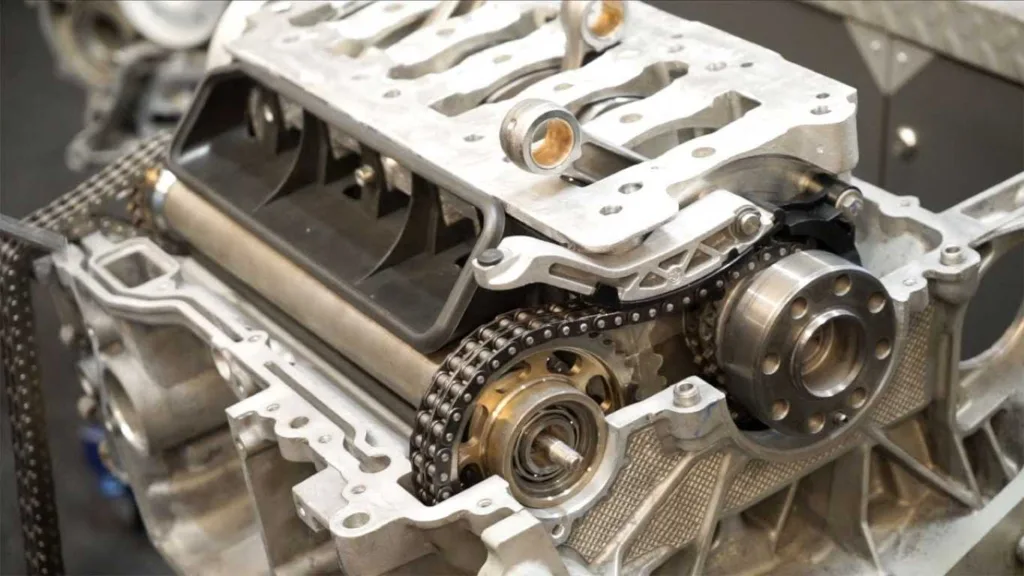
Porsche has used an intermediate shaft to drive the camshafts indirectly from the crankshaft since the early aircooled 911. In those engines, and in the later water-cooled Turbo, GT2, and GT3 Mezger-derived engines, the intermediate shaft is supported by pressure-fed plain bearings.
With the introduction of the Boxster in 1997, Porsche changed the flywheel-side support of the intermediate shaft to a sealed ball bearing in the M96 and later M97 engines. Porsche did not specify a service interval for this bearing or originally offer it as a separately replaceable maintenance part. This sealed rolling-element bearing is the source of the IMS bearing issue associated with 1997–2008 Boxster, Cayman, and normally aspirated 911 models. Turbo, GT2, and GT3 models use the Mezger-derived engine and are not affected by the same sealed-ball-bearing IMS problem. To learn more about the intermediate shaft itself, see IMS 101.
Which Porsche Models and Years Have IMS Bearing Problems?
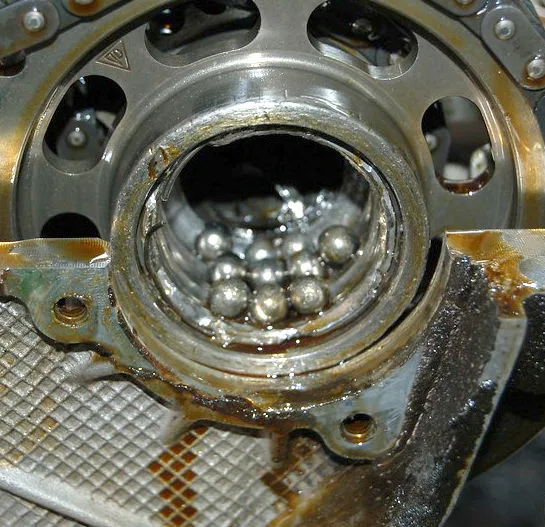
The Eisen class-action litigation reported an IMS bearing failure rate of approximately 1% for the earlier dual-row bearing and approximately 8% for the smaller single-row bearing used in many 2000–2005 Boxster and 911 engines during the warranty period. The larger non-serviceable bearing used from 2006–2008 also has an approximately 1% failure rate. These warranty-period figures should not be interpreted as lifetime failure rates; original bearings remain subject to age, wear, contamination, and lubrication-related deterioration as these vehicles get older.
Anyone with a 1997–2005 Boxster or 911 should have their intermediate shaft bearing replaced as part of preventative maintenance. Replacement of the Porsche IMS bearing is intended to prevent catastrophic engine damage in their engines caused by the failure of the intermediate shaft bearing. Learn more about IMS bearing problem years associated with Porsche Boxster and 911 996 models.
Starting in 2009, the Porsche Boxster, Cayman, and 911 vehicles received the MA1 engine which eliminated the intermediate shaft completely, driving the camshafts directly off the crankshaft.
Porsche 996 and 997 GT3, Turbo, and GT2 Mezger engines have oil-pressure-fed plain bearings on both ends supporting the IMS shaft, therefore they do not have IMS bearing problems like the aforementioned M96 and M97 engines.
When Should the Porsche IMS Bearing Be Replaced?
For 1997–2005 engines with a serviceable factory IMS bearing, replacement should be treated as preventative maintenance rather than waiting for symptoms of failure. Owners should continue to drive and enjoy their cars, but an original serviceable bearing should not be assumed safe simply because it has survived to date.
IMS bearing life is influenced by multiple factors, including bearing load, lubrication, contamination, oil condition, operating temperature, engine speed, and age. Some original bearings have failed at very low mileage while others have survived well beyond 100,000 miles. Once an IMS bearing has begun to fail, however, a simple bearing replacement is no longer appropriate because the intermediate shaft and the rest of the engine may already be contaminated or damaged.
If an IMS bearing fails, the intermediate shaft can be damaged and ferrous debris can circulate throughout the engine. Loss of camshaft timing can also result in valve-to-piston contact and other severe internal damage. At that point, installing an IMS Retrofit or IMS Solution is no longer an appropriate repair; the engine must be evaluated for contamination and collateral damage, and complete disassembly may be required.
For 2006–2008 engines with the larger non-serviceable IMS bearing, the bearing cannot normally be replaced without complete engine disassembly. When the transmission is already removed for clutch or rear-main-seal service, LN Engineering recommends removing the factory grease seal so engine oil can better lubricate and cool the original bearing. Learn more about the larger non-serviceable 2006–2008 Porsche IMS bearing.
For 1997–2005 engines with a serviceable IMS bearing, replacement is a preventative procedure and should be performed before the original bearing begins to fail. Once an engine has suffered an IMS bearing failure, simply installing a new bearing can lead to another failure if contamination or damage elsewhere in the engine is not addressed.
Porsche IMS Bearing Replacement Options
LN Engineering was the first to offer an IMS bearing replacement for Porsche Boxster and 911 models with its IMS Retrofit and also pioneered the procedure and developed the tools to allow replacement of the original Porsche IMS bearing.
LN Engineering offers several IMS bearing replacement approaches for serviceable 1997–2005 engines. The RND RS Roller IMS Retrofit uses a cylindrical roller bearing with integral fore-and-aft thrust control. The IMS Retrofit uses a ceramic-hybrid ball bearing designed specifically for the IMS application. The IMS Solution eliminates the rolling-element bearing altogether and converts the IMS to a pressure-fed plain bearing based on the same basic principle used in Porsche Mezger engines.
What Happens When the Porsche IMS Bearing Fails?
The purpose of the intermediate shaft is to drive the camshafts which are connected to the intermediate shaft by way of two timing chains on either end of the shaft. The intermediate shaft is driven by the crankshaft via another timing chain. Unlike the intermediate shaft in a Mezger engine, the M96/M97 uses an oil fed plain bearing on one end and a sealed ball bearing on the other end. However, when the ball bearing fails, there may be a loss of proper camshaft timing resulting in bent valves, however the foreign object debris that is generated by the failure of the ims bearing can cause further collateral damage, requiring the engine to be completely disassembled to be repaired. Simply waiting to change an IMS bearing until it has failed isn’t an option.
What Are the Symptoms of Porsche IMS Bearing Failure?
In many cases, the first symptom of an IMS bearing failure is catastrophic damage to the engine. Since the original ball bearing used by Porsche is sealed, this seal works to keep wear debris contained within the bearing. It is not until the bearing is close to complete failure that the grease seal on the IMS bearing wears out, allowing debris to exit the bearing. This debris will get caught in the oil filter and looks like silver glitter. Since it’s ferrous, running a magnet over the filter media will pick it up. However, the single row bearing used from 2000–2005 can go from generating no visible debris to complete failure with no warning, unlike the earlier dual row bearing that often will continue emitting wear particles for thousands of miles before complete failure.
Standard used oil analysis using ICP or RDE spectroscopy generally will not detect the larger wear particles produced by a failing IMS bearing. A separate particle-count and particle-size analysis is required when the goal is to evaluate larger debris. Oil-filter inspection therefore remains an important part of IMS monitoring, but the absence of visible debris does not prove that a single-row bearing is healthy because it may provide little or no warning before failure.
It is best practice to change the IMS bearing before it starts to fail as part of regularly scheduled maintenance. That also goes for engines that have already been fitted with a replacement ball or roller bearing IMS as these all are wear components with exception of the IMS Solution that backdates the problematic IMS bearing with an oil fed plain bearing like that in a Mezger engine.
How Much Does Porsche IMS Bearing Replacement Cost?
IMS bearing replacement labor typically requires about 10–14 hours, depending on the Porsche model and transmission. In many metro areas, independent Porsche specialist labor rates can run approximately $200–$300 per hour, putting labor alone in the roughly $2,000–$4,200 range. Parts are additional: an IMS Retrofit kit is typically around $1,000, while an IMS Solution is approximately $2,000. The total can increase from there depending on the vehicle’s service history, prequalification findings, and whether related maintenance such as the clutch, rear main seal, AOS, water pump, or other deferred service is performed at the same time. Tiptronic 911 models may also require additional labor because the engine and transmission must be lowered to separate them. Learn more in our Porsche IMS Bearing Replacement Cost Guide.
Which IMS Bearing Does My Porsche Have?
From 1997 to 1999, Porsche used a dual-row intermediate shaft bearing which has proven to be as robust as the larger single row used from 2006 through 2008 model years. The Eisen vs Porsche Class Action Lawsuit filed against Porsche over IMS failures revealed the factory Dual Row was much stronger than the Single Row used from 2000–2005. According to information published about the Eisen IMS Class Action Lawsuit, the single row IMS bearing used in 2000 through 2005 model years is reported to have an 8% failure rate, versus less than 1% with the dual row IMS bearing which has twice the load capacity of the single row bearing used by Porsche.
Not Sure Which IMS Bearing Your Porsche Has?
Model year alone cannot identify the bearing in every 2000–2001 or 2005 Porsche, and a factory replacement engine may have a different IMS bearing than the vehicle originally received. Use the IMS Lookup or verify the bearing configuration before ordering parts or planning preventative service.
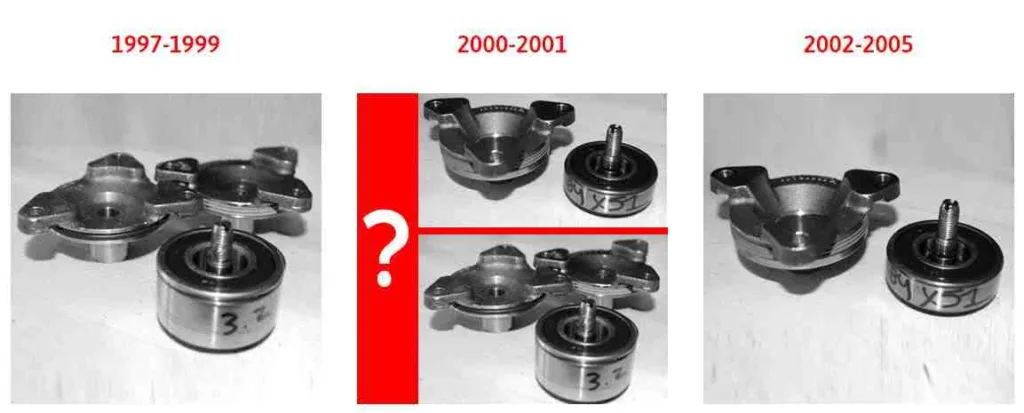
Starting in 2000, Porsche began phasing out the dual row bearing and went to a smaller single row, with significantly less load capacity. From 2002 through 2005, all engines used this smaller intermediate shaft bearing until they went to the larger, third revision for the 2006 model year, which increased the load capacity back to what the original dual row bearing could support. The larger model year 2006 and later bearing also increased the diameter, which increased the bearing and ball speed, further improving the bearing. However, this change has not been enough to resolve the IMS failure issues completely.
If your engine was replaced in or after model year 2006, it will have the larger non-serviceable bearing even if that bearing wasn’t original to your model year. Replacement engines from Porsche utilized whatever was the most current IMS bearing in the year the engine was built.
By far, the single-row ball bearing used starting in model year 2000 through 2005 are the most problematic. With half the load capacity, it is clear to see that the reduced load capacity of the single row IMS bearing is a significant contributing factor to the increased number of failures and that oiling alone is not the cause or solution to IMS issues.
Do Porsche 997 and 987 Models Have IMS Bearing Problems?
Although the forums might tell you that 987 and 997 models do not have IMS bearing problems, some 2005 model year vehicles were fitted with the problematic single row bearing. The larger, non-serviceable bearing used in the 2006 through 2008 model year Porsche Boxster, Cayman, and 911 models is the strongest of the factory Porsche intermediate shaft bearings, but they still can fail. As the bearing cannot be changed without complete engine disassembly, many experts agree that removing the grease seal off the IMS bearing will extend the service life of original bearing and is a must anytime you have the gearbox out to do a clutch job or replace the rear main seal.
What Should I Do With the Larger Non-Serviceable 2006–2008 IMS Bearing?
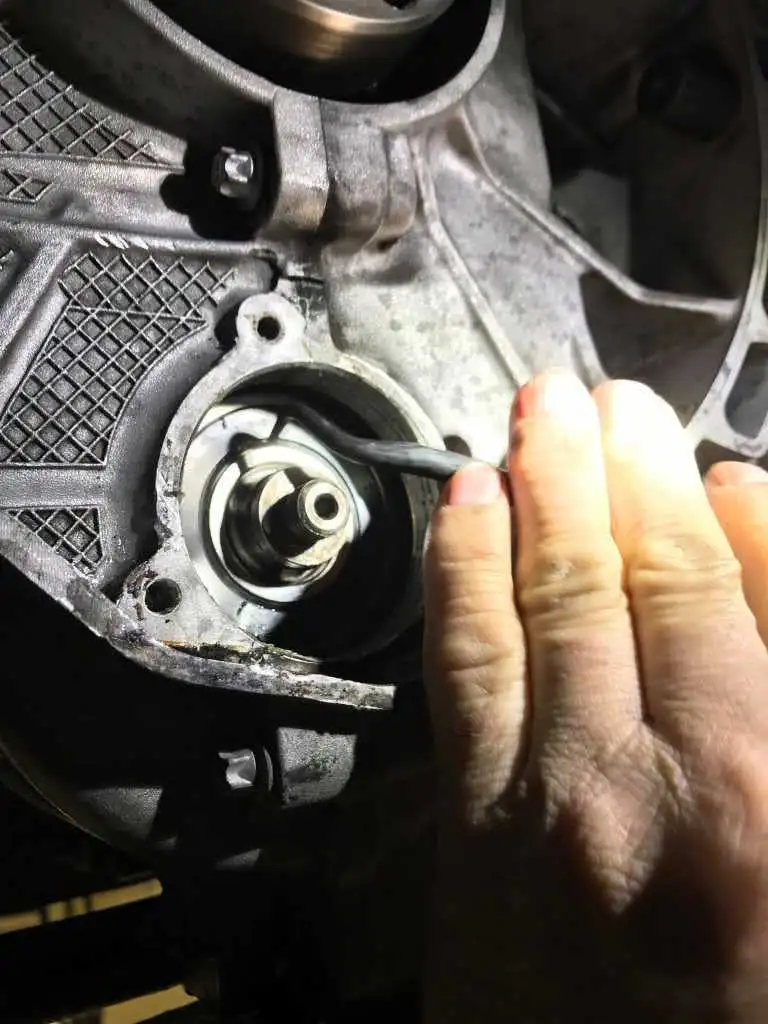
Most 2005 Boxster and 911 engines were originally fitted with the serviceable 6204 single-row bearing, although some later 2005 engines received the larger 6305-series non-serviceable bearing. Porsche factory replacement engines manufactured in or after model year 2006 generally use the larger bearing as well. Because the 6305 bearing cannot normally be replaced without engine disassembly, LN Engineering recommends removing the factory grease seal when the transmission is already removed for clutch or rear-main-seal service. This allows engine oil in the sump to lubricate and cool the original bearing.
Once the seal has been removed, we recommend a shorter oil change interval of no more than 6 months and 5,000 miles, using a quality 5W-40 motor oil. Regular used oil analysis along with periodic inspection of the oil filter can be used to monitor the condition of the IMS bearing moving forward.Learn more about what to do if your Porsche Boxster, Cayman, or 911 has the larger, non-serviceable 2006–2008 IMS bearing.
How much does it cost to remove the grease seal of the non-serviceable 2006–2008 Porsche intermediate shaft bearing?
On 1997 through 2005 models where the IMS bearing is serviceable, excluding parts bearing replacement usually takes 10 to 14 hours and depends on the model being serviced. Tiptronic 911 models require the engine and transmission to be dropped to facilitate replacement of the IMS bearing, so plan on extra expense with those models. Removing the grease seal off the non-serviceable 2006–2008 Porsche IMS bearing requires the same amount of labor as it would to install an IMS Retrofit as you still have to go through all the same steps to be able to get to the IMS bearing to allow for removal of the grease seal. Rather than replacing the bearing, you’ll just be removing the grease seal and replacing the o-ring on the IMS flange and center stud, as well as reinstalling the IMS flange with new microencapsulated bolts.
Did Porsche ever offer a factory replacement IMS bearing?
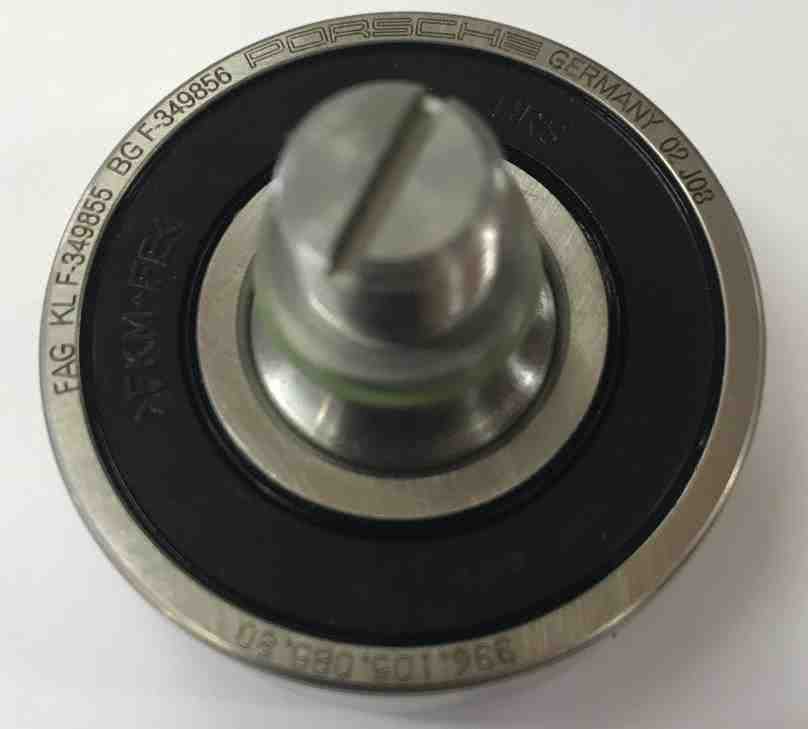
For years, the only way you could replace your IMS bearing was to tear down your engine completely and install a completely new intermediate shaft from Porsche. Many people do not know, but at some point after the resolution of the Eisen Class Action lawsuit, Porsche chose release their own IMS bearing replacement kit using a sealed 6204 ceramic hybrid ballbearing, with 52100 steel races and sintered silicon nitride balls. This came a full decade after LN Engineering publicly released its first IMS Retrofit kit, using the same ceramic hybrid ball bearing technology Porsche eventually chose to utilize with their own bearing replacement.
If purchasing a new replacement intermediate shaft from Porsche, you will receive the latest revision which is the non-serviceable 2006–2008 which has a sealed 6305 single row IMS bearing. It is recommended that you remove the grease seal before installation, or even better, replace the 2006–2008 bearing with an IMS Retrofit or IMS Solution which allows the IMS bearing to be serviced if and when needed without complete engine disassembly.
Why Use a Ceramic-Hybrid Ball Bearing for the Porsche IMS?
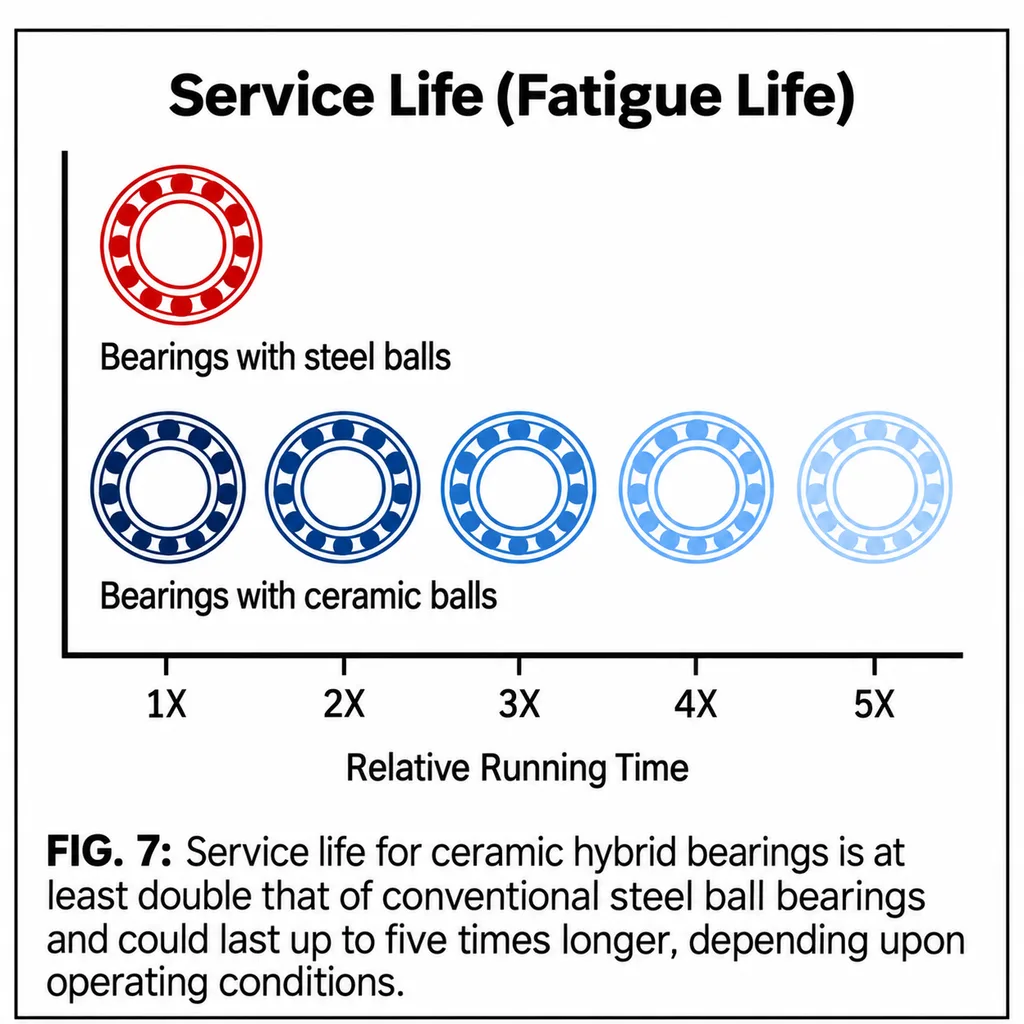
Ceramic hybrid ball bearings use 52100 steel races with sintered silicon nitride (ceramic) balls. In the case of the IMS Retrofit, CERBEC balls are utilized.
Ceramic-hybrid bearings combine hardened 52100 steel races with sintered silicon-nitride balls. In the IMS application, the ceramic rolling elements reduce adhesive wear and centrifugal loading while offering excellent resistance to the lubrication conditions encountered in the M96/M97 engine.
LN Engineering selected ceramic-hybrid technology because it performed well in the IMS application while retaining the radial and thrust-load capability of a deep-groove ball bearing. Porsche later chose the same general ceramic-hybrid bearing technology for its own replacement single-row IMS bearing kit.
Does a Porsche IMS Ball or Roller Bearing Need a Direct Oil Feed?
No. An appropriately configured open ball or roller IMS bearing can be lubricated by the engine oil already present in the M96/M97 sump. The intermediate shaft is located low in the engine and is exposed to engine oil. Eliminating the grease seal opens the bearing to this oil. As supplied by Porsche, the intermediate shaft uses a sealed ball bearing. The original bearing was grease filled, considered a “permanent” lubricant. However, the original bearings and seals used are rated only to 250F and over time, the seals become hard, allowing the grease under normal operation to be “washed” out of the bearing during operation. As the intermediate shaft itself is completely submerged at times, the shaft will actually fill up with engine oil. With long drain intervals, contaminants in the oil find their way into the bearings and intermediate shaft. The IMS tube itself will end up storing a sizable amount of oil that will centrifugally be fed to the bearing during operation. This is another reason why frequent oil changes are a must – as this oil gets trapped and is one of the sources for lubrication of the bearing! These worn out seals do allow oil in but they also limit the exchange of fresh oil in and out of the intermediate shaft.
Once the bearing begins to wear, the seal will actually fail completely, allowing for oil to wash out the permanent grease but not allowing for fresh oil to exchange in and out of the bearing during operation. It is at this point that you can begin to find debris in the filter from the seal and from the bearing itself.
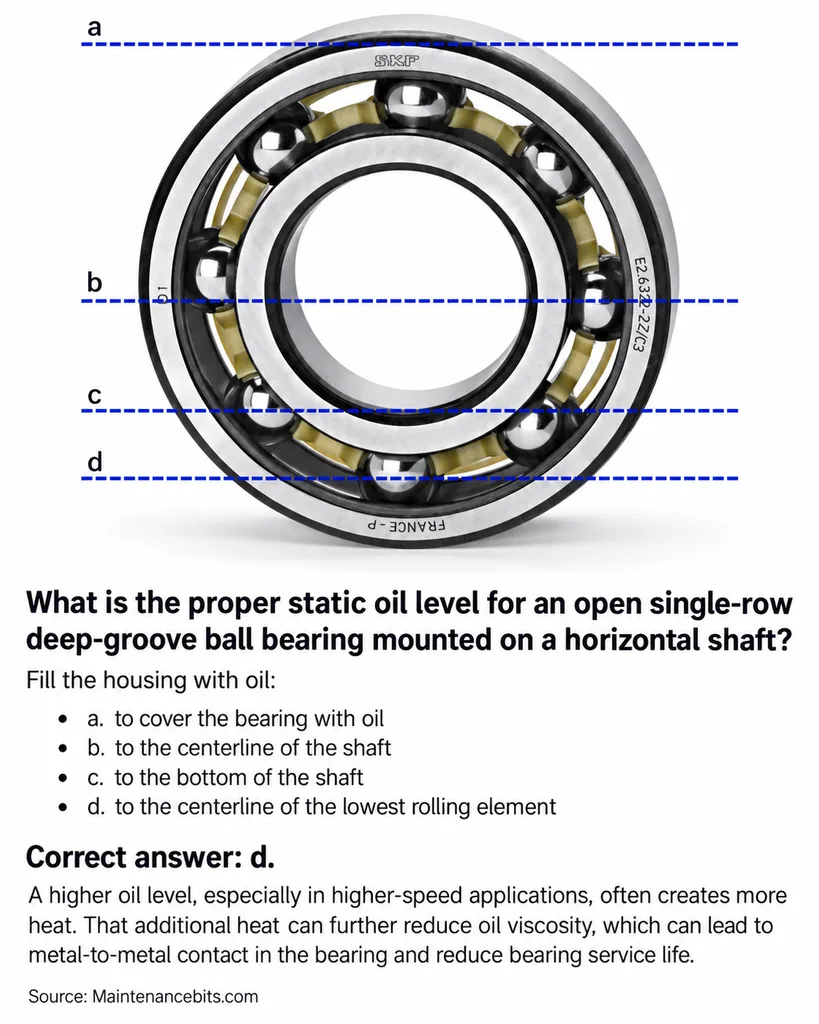
The IMS Retrofit uses an open bearing (no grease seal), allow engine oil to freely enter and exit the bearing. The ceramic hybrid bearing used in all IMS Retrofit kits require minimal oiling, far exceeded by oil in the engine’s “integrated dry sump.” According to Maintenencebits.com, a higher oil level, especially in higher speed applications, often creates more heat. This can reduce the oil viscosity even further, leading to metal-to-metal contact in the bearing, and a reduction in bearing service life. The proper static oil level for an open single row deep groove ball bearing mounted on a horizontal shaft is at the centerline of the lowest rolling element.
Some claim without forced oiling of the ball bearing there is inadequate lubrication. Unfortunately, there is no evidence of this with thousands of stock or ceramic hybrid replacement bearings we have inspected. If oil alone was the problem, we would expect failure percentages from the Eisen Class Action Lawsuit to be the same for single and dual row IMS bearings, which is clearly not the case.
Another issue that forced oiling of a ball bearing does not solve is over-loading of the ball bearing. The single row ball bearing used starting in 2000 through 2005 was replaced with a larger bearing in 2006 with double the load capacity, restoring the original load capacity the dual row bearing first used in the M96 engine. Insufficient load capacity leading to wear and fatigue is the primary problem with the single row bearing used in 2000 through 2005, not lubrication! It is for this same reason that the class action lawsuit settlement regarding the IMS only covers vehicles with the single row bearing as found in 2000 through 2005 model year vehicles!
The IMS Solution and Single Row Pro IMS Retrofit both provide increased load capacity over the conventional single row bearing, but the IMS Solution eliminates the problematic ball bearing by using a simple plain bearing that is pressure-fed oil. Orifice size as well as oil source for lubrication of the IMS Solution has been engineered to ensure optimal operation while not causing side-effects from pressure losses (leading to lifter and variocam problems), oil foaming, and crankcase windage that flood oil feeding a ball bearing causes.
Forced oiling of a ball or roller IMS bearing does not provide any benefit as the bearing does not require or benefit from additional oil. Lubrication alone is not the problem.
Ball Bearing vs. Roller Bearing for Porsche IMS
As you would imagine, the IMS Retrofit kit went through many iterations during development, including forced oiling of the ball bearing prior to switching to a ceramic ball for it’s performance in environments with poor lubrication. We did develop a version that utilized a cylindrical roller bearing with thrust ring, but it never made it from testing to production for the primary reason that Porsche chose a ball bearing originally, not a roller. Remember that Porsche also chose to use a ceramic hybrid ball bearing for their replacement released in 2017 as well when they could have chosen a roller bearing. Roller bearings have been used in automotive applications like gearboxes when paired with a ball bearing for thrust control for many years and can also be utilized in this application if sufficient thrust control is provided. Some manufacturers make false claims about the load ratings of their roller bearings with deceptive advertising. So when researching what bearing technology you want to use, there are some facts that are important to consider:
| Bearing / Design | Dynamic Load Capacity | Maximum Thrust Load | Thrust Control |
|---|---|---|---|
| Factory 6204 single-row ball bearing | 2,900 lb | 1,450 lb | Internal |
| Common NJ / NU204 cylindrical roller bearing | 3,750 lb | 375 lb | Depends on kit design |
| LN dual-row ceramic-hybrid bearing | 4,000 lb | 2,000 lb | Internal |
| RND RS Roller IMS Retrofit | 5,800 lb | 580 lb | Internal fore-and-aft thrust control |
Roller bearings, like ball bearings, will have service intervals, requiring future replacement, even if manufacturers claim otherwise. The only IMS replacement that is permanent and does not require future servicing is the IMS Solution which is based on the oil-pressure-fed plain bearing design used by Porsche for the Mezger engine’s intermediate shaft.
Why does LN Engineering offer a cylindrical roller IMS bearing replacement?
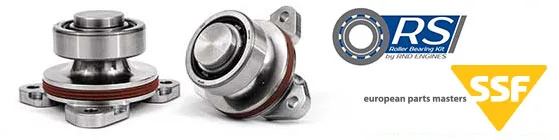
LN Engineering evaluated cylindrical roller bearings during the original development of the IMS Retrofit, but ultimately chose a deep-groove ball bearing because the IMS application requires both radial and thrust-load capability and Porsche had also selected a ball bearing for the original design. The decision to later offer the RND RS Roller IMS Retrofit was not because the ceramic-hybrid ball-bearing IMS Retrofit was inferior. It came down to customer preference and market demand. Several years after the IMS Retrofit was introduced, cylindrical roller IMS replacements became popular, and SSF Imported Auto Parts approached LN Engineering because its wholesale customers were asking for a roller-bearing option but SSF did not feel the products then available met the quality level it wanted to supply. Because LN Engineering had already developed and tested a cylindrical roller design with proper fore-and-aft thrust control, that work became the basis for the RND RS Roller IMS Retrofit.
What can be done to minimize the chance of the intermediate shaft bearing failure?
IMS bearing failures have historically been associated with vehicles that are driven infrequently, sit for extended periods, or are used primarily for short trips. Regular operation, appropriate oil-change intervals, and avoiding prolonged low-rpm/high-load operation are sensible maintenance practices. LN Engineering recommends a quality 5W-40 oil such as Driven DT40, with oil-change intervals appropriate to the vehicle’s use and condition.
Along with more frequent oil changes, the addition of a magnetic drain plug coupled with close inspection of the oil filter and magnet at these shorter intervals may help owners identify a failure in its early stages, but later models using the single row bearing can fail with little warning. When inspecting the filter and magnetic drain plug, ferromagnetic debris from the intermediate shaft bearing can be identified easily, appearing like silver glitter. Larger debris than this is indicative of a complete failure. Installation of the LN Engineering Spin-On Filter Adapter can help to prevent debris from re-entering the engine. This is accomplished by eliminating the bypass that can allow this wear metal from causing collateral damage in your engine. When using the Spin on Filter Adapter & FilterMag Oil Filter Magnet, a filter cutter is used to inspect the full flow filter.
It is best practice to replace the IMS bearing as part of regular preventative maintenance. Depending on what bearing technology is used, service intervals can vary greatly, with the IMS Solution’s oil fed plain IMS bearing is considered the best solution to prevent IMS bearing failures.
What if my original bearing is failing or has already failed?
The IMS Retrofit and IMS Solution procedures are intended for PROACTIVE installation and not REACTIVE measures only and should be considered a preventative maintenance item, like a timing belt on many modern engines. Once your original bearing has failed it is too late. Performing an IMS Retrofit or IMS Solution procedure after a failure will not “save” your engine. By no means should an IMS Retrofit procedure be carried out if the original bearing has started to fail as the intermediate shaft will be damaged by such failure. If the IMS bearing needs to be cut out of the IMS bearing tube (shaft) to remove it, by no means can a new bearing be installed! The engine will have to be disassembled and intermediate shaft replaced.
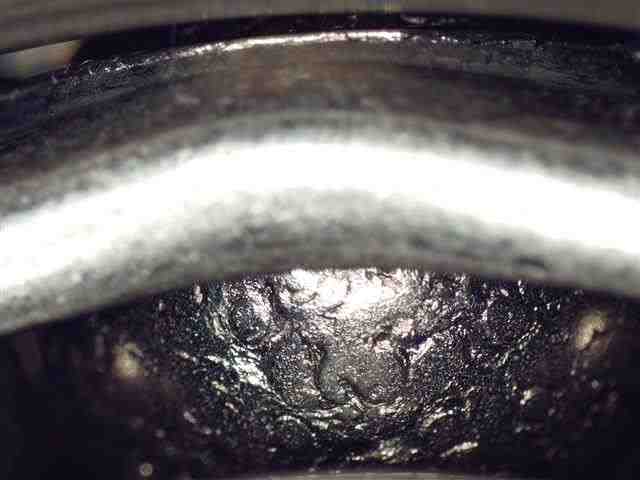
There are many reasons for bearing failure, and usually each failure is due to a combination of causes, not just a single cause. Spalling occurs as a result of normal fatigue where the bearing has reached the end of its normal life span but this is not the most common cause of bearing failure. Spalling detected in bearings can generally be attributed to other factors. A common cause of bearing failure is due to contamination from tiny metallic particles left over from a previous mechanical failure. These particles are suspended in the oil and if they are allowed to get into the bearing, the result is tiny dents in the hard steel raceway. Often the dent is surrounded by a microscopic raised area (or ‘lip’), and when the ball rolls over this lip, the ultra-high point loading exceeds the strength of the steel and it fractures, leaving behind a jagged depression (or ‘pit’). Once this cycle begins, wear is greatly accelerated and the bearing will fail prematurely. One of the most common sources of trouble in bearings is wear and pitting caused by foreign particles and is responsible for 70% of all early bearing failures.
How do I know if I should replace my bearing?
Not every Porsche engine is healthy enough to receive an IMS bearing replacement. Prequalification is intended to identify engines that already show evidence of IMS distress or other internal problems before preventative service is performed. A proper evaluation can include sump and oil-filter inspection, camshaft deviation, cylinder inspection, fuel trims, over-rev data, crankcase vacuum, and checks of related systems such as the injectors, MAF, and oxygen sensors. Any significant problem found during prequalification should be addressed before proceeding with an IMS Retrofit or IMS Solution.
How do I check to see if my bearing has already been replaced?
The best evidence of a previous IMS Retrofit or IMS Solution installation is the serial-number documentation supplied with the kit. Genuine LN Engineering kits are serialized, and registered installations can be checked using the IMS Lookup. Service records, invoices, the serial-number sticker, and physical inspection of the IMS flange can also help verify what has been installed when the history is uncertain.
Vehicles previously retrofitted with an IMS Retrofit or IMS Solution IMS bearing replacement should have a serial number sticker affixed. LN Engineering maintains an online database. You can look up your IMS serial number at https://lnengineering.com/ims-lookup/ which provides production date and if registered, will also provide additional information regarding the installation (where available).
Who can replace the Intermediate Shaft Bearing in my Porsche Boxster or 911 996?
LN Engineering products are sold worldwide to independent repair shops and dealerships through authorized resellers. Installation by an IMS Solution Certified Installer is not required, but professional installation and compliance with all applicable prequalification, installation, registration, and warranty requirements are required for warranty coverage. IMS Solution LLC maintains a network of Certified Installers that have received specialized training.
LN Engineering offers tool rental for do it yourself enthusiasts. Before committing to carry out the procedures yourself, Bentley Publishers has produced an excellent video on the IMS Retrofit procedure using the LN Engineering IMS Retrofit kit and IMS Pro Tool Kit based off the procedure developed by Flat 6 Innovations and LN Engineering LLC. The procedure outlined by the Bentley video allows for extraction of the original factory sealed ball-bearing in model year 1997 through 2005 vehicles and replacement using LN Engineering’s ceramic hybrid ball-bearing which is exposed to engine oil for lubrication.
What is the warranty on the IMS Retrofit and IMS Solution?
The Single Row Pro and Classic Dual Row IMS Retrofit are offered with a two year or 24,000 miles limited warranty, whichever comes first. The IMS Solution carries a five year unlimited mileage limited warranty. The warranty is valid only if the product was installed as part of preventative maintenance before the original bearing failed or has begun to fail and all installation guidelines and requirements including pre-qualification and registration are met.
Porsche IMS Bearing Service Intervals
Porsche did not publish a scheduled replacement interval for the factory IMS bearing. LN Engineering provides service guidelines for replacement bearings based on the specific product installed. Time and mileage limits are whichever comes first.
| IMS Bearing / Solution | Recommended Service Interval |
|---|---|
| Single Row Pro IMS Retrofit | 6 years / 75,000 miles |
| Classic Dual Row IMS Retrofit | 6 years / 75,000 miles |
| RND RS Roller IMS Retrofit | 6 years / 75,000 miles |
| Classic Single Row 106-08.2 IMS Retrofit | 4 years / 50,000 miles |
| Pelican Parts PEL-IMS-1 | 3 years / 36,000 miles |
| IMS Solution | No scheduled replacement interval |
If your Porsche is still fitted with the superseded Classic Single Row 106-08.2 IMS Retrofit and it has reached its time or mileage limit, the bearing should be replaced as soon as practical. The IMS Solution is designed for the life of the engine and does not have a scheduled IMS replacement interval.
Although other manufacturers may claim their ball or roller intermediate shaft bearing replacement permanently fix the Porsche IMS bearing issue, it is prudent to replace these as a wear item. The IMS Solution is the only permanent solution to prevent IMS bearing failures.
Is there any information about the Intermediate Shaft Bearing issue available from Porsche?
Although there is little information available outside of what was made public during the Eisen class action lawsuit regarding IMS bearing failures in Porsche Boxster and 911 996 models, the Porsche Club of America as well as several other local PCA regions have released several videos and articles thoroughly explaining the Porsche intermediate shaft and IMS bearing, IMS failures, and available solutions to the IMS bearing problem. Find out more information about the Porsche IMS bearing issue from the Porsche Club of America.
IMS Retrofit: Serviceable Porsche IMS Bearing Replacement
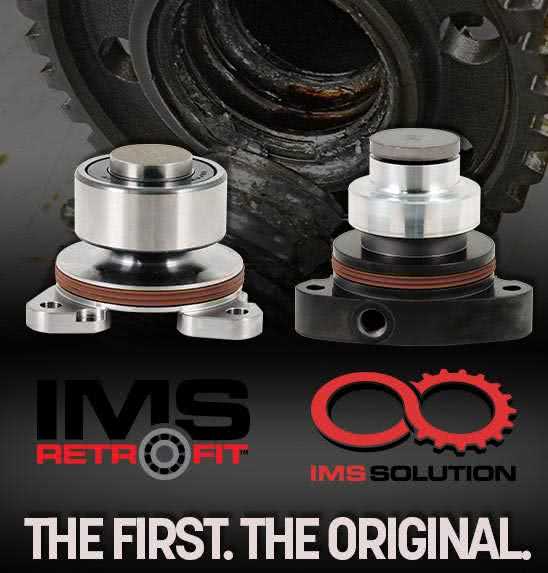
The IMS Retrofit™ is LN Engineering’s serviceable rolling-element replacement for applicable Porsche M96/M97 engines. Genuine LN kits are serialized and use purpose-selected bearing components designed for the IMS application.
All genuine LN IMS Retrofit kits come laser etched, engraved, and serial numbered to validate their authenticity and feature custom-made, ceramic hybrid ball bearings made exclusively for LN Engineering using Japanese 52100 bearing races, polyamide or steel cages, and genuine Cerbec sintered silicon nitride ceramic balls that are made in the USA.
Shop IMS Retrofit Porsche Intermediate Shaft Bearing Replacement Kits Now
IMS Solution: Pressure-Fed Plain-Bearing Conversion
Prevent costly engine failure by eliminating the problematic ball-bearing by backdating your IMS with a pressure-fed oil lubricated plain bearing, just like in an aircooled Porsche. This patented design is the last IMS bearing you will ever need.
Shop IMS Solution Porsche Intermediate Shaft Bearing Replacement Kits Now
RND RS Roller IMS Retrofit: Cylindrical Roller Bearing With Thrust Control
Cylindrical bearings provide great lateral load capacity, sacrificing their maximum load cap in thrust (axial movement). That’s why precise thrust control is crucial for bearing’s longevity and reliability. RND Roller Bearing IMS Retrofit kit is the only cylindrical roller bearing IMS fix on the market that uses a Genuine Koyo bearing featuring proper heat treated, 52100 bearing steel thrust surfaces on both sides to handle thrust load both fore and aft with increased number of roller elements for added load capacity. The RND RS Roller bearing is also the only commercially available cylindrical roller IMS bearing replacement that allows for proper retention and feaures the strongest cylindrical roller bearing used of any roller bearing ims replacement for 97-05 Porsche Boxster and 911 996 models with a serviceable dual row or single-row intermediate shaft bearing.
Shop RND RS Cylindrical Roller IMS Retrofit Porsche Intermediate Shaft Bearing Replacement Kits
| Image | SKU | Name | Price | Buy: | Stock | hf:tax:product_cat | hf:tax:vehicle-fitment |
|---|