
IMS Retrofit

Porsche IMS Retrofit: The Original IMS Bearing Replacement
What Is the IMS Retrofit?
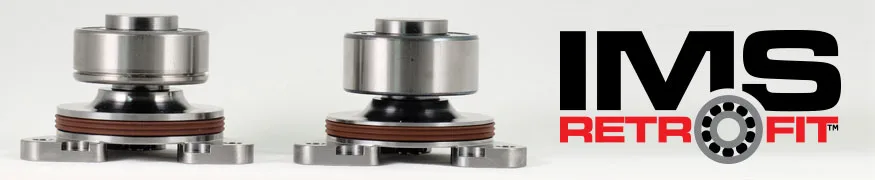
The IMS Retrofit is the original externally serviceable replacement for the problematic factory intermediate shaft bearing used in applicable Porsche Boxster and normally aspirated 911 models with M96 and early M97 engines. Introduced in 2008, the IMS Retrofit and the procedure and tooling required to replace the factory bearing were developed by Flat 6 Innovations’ Jake Raby and LN Engineering’s Charles Navarro, allowing applicable engines to be serviced as preventative maintenance without complete engine disassembly.
For engines with a serviceable factory IMS bearing, the goal is to replace the bearing before it fails. Once an IMS bearing has begun to fail, metal debris can spread through the engine and loss of camshaft timing can result in valve-to-piston contact and extensive internal damage. At that point, an IMS Retrofit is no longer a preventative repair—the engine must be evaluated for collateral damage and may require a complete rebuild.
Not sure whether your Porsche has a serviceable IMS bearing? See our Porsche IMS Bearing Problem Years guide. If you are trying to determine whether the bearing has already been replaced, see When to Replace a Porsche IMS Bearing.
Why Choose the IMS Retrofit?
- Developed specifically for Porsche M96 and early M97 engines
- Open ceramic-hybrid bearing lubricated by engine oil
- Designed to carry both radial and thrust loads
- No engine case modification or external oil-feed system required
- Externally serviceable without complete engine disassembly on applicable engines
- Serialized for authenticity and installation tracking
- Backed by LN Engineering technical support and installation tooling
Why Does the IMS Retrofit Use a Ball Bearing?
The factory IMS problem was not simply that Porsche used a ball bearing. The intermediate shaft requires support for both radial and thrust loads, which is one reason a deep-groove ball bearing is well suited to the application. The weaknesses of the factory system involved the complete bearing design, including load capacity, lubrication, sealing, and the lack of a scheduled service interval.
During development of the original IMS Retrofit, LN Engineering and Flat 6 Innovations evaluated different bearing approaches, including cylindrical roller designs. The ceramic-hybrid ball-bearing configuration was selected because it provides the required radial and axial load capability in a compact, proven package. The bearing is left open so engine oil can lubricate and cool it during operation.
For owners or shops who specifically prefer a cylindrical roller bearing, LN Engineering also offers the RND RS Roller IMS Retrofit. For owners who want to eliminate the rolling-element bearing altogether, the IMS Solution converts the intermediate shaft to a pressure-fed plain bearing with no scheduled IMS replacement interval.
Which LN IMS Solution Is Right for You?
| Option | Best Fit | Service Requirement |
|---|---|---|
| IMS Retrofit | Owners who want the original, proven ceramic-hybrid IMS replacement | Periodic replacement |
| RND RS Roller IMS Retrofit | Owners or shops who specifically prefer cylindrical roller technology | Periodic replacement |
| IMS Solution | Long-term ownership and eliminating scheduled IMS replacement | No scheduled replacement interval |
Why Buy an IMS Retrofit from LN Engineering?
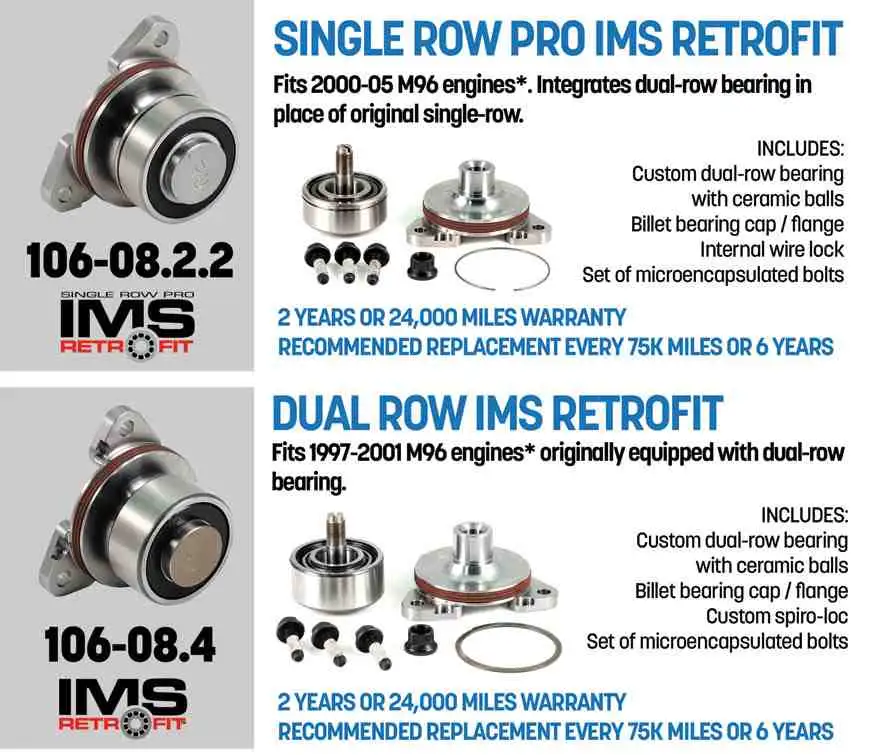
LN IMS Retrofit kits use custom ceramic-hybrid bearings manufactured specifically for LN Engineering using premium Japanese bearing components and sintered silicon-nitride ceramic balls. The patented Single Row Pro system allows a dual-row bearing assembly to be installed in place of the original smaller single-row bearing without machining or modifying the engine case.
Genuine LN IMS Retrofit kits are laser etched, engraved, and serial numbered to help validate authenticity and document installation history. LN Engineering maintains an IMS Lookup for registered installations, which can help future owners verify that the IMS has been serviced and identify what was installed.
LN Engineering also provides application support, installation procedures, and an IMS bearing replacement tool rental program, including the rear main seal tool, for qualifying retail purchases from the LN Engineering website.
How Often Does an IMS Retrofit Need to Be Replaced?
The IMS Retrofit is a serviceable rolling-element bearing and should be replaced at the specified interval for the product installed. Current Single Row Pro and Classic Dual Row IMS Retrofit kits have a recommended service interval of 6 years or 75,000 miles, whichever comes first. The Classic Single Row 106-08.2 IMS Retrofit has a 4-year or 50,000-mile interval.
If you plan to keep the car for many years and would prefer to avoid future IMS bearing replacement labor, consider the IMS Solution. Because the IMS Solution uses a pressure-fed plain bearing rather than a ball or roller bearing, it has no scheduled IMS replacement interval.
IMS Replacement Is Preventative Maintenance
An IMS Retrofit should not be used as a shortcut to repair an engine after the original bearing has already begun to fail. Before installation, the engine should be properly evaluated to confirm that it is a suitable candidate for preventative IMS service. LN Engineering recommends IMS prequalification, including oil-filter and sump inspection, camshaft deviation review, cylinder inspection, and other engine-health checks as appropriate.
Preventative IMS service is also far less expensive than repairing the damage that can follow a complete IMS failure. For current labor and parts planning ranges, see our Porsche IMS Bearing Replacement Cost guide.
Which Porsche Models Can Use an IMS Retrofit?
1997–1999 Boxster and 1999 911 996 engines generally use the serviceable dual-row bearing. Model years 2000–2001 may have either a dual-row or single-row bearing. Model years 2002–2004 use the smaller single-row bearing. Model year 2005 is a transition year and should be verified before ordering parts because some engines use the serviceable single-row bearing while others use the later larger non-serviceable bearing.
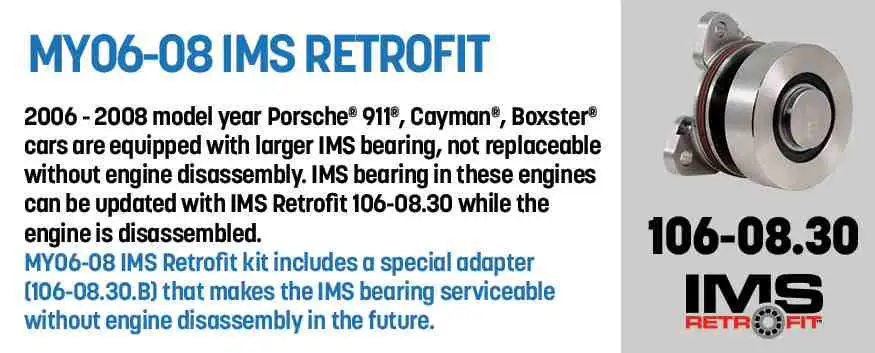
Model year 2006–2008 Porsche Boxster, Cayman, and normally aspirated 911 models use the larger non-serviceable IMS bearing. Correct replacement of this bearing requires complete engine disassembly, so an external IMS Retrofit is not normally applicable. When the transmission is removed for other service, LN Engineering recommends removing the grease seal from the original bearing so engine oil can better lubricate and cool it.
For a complete overview of Porsche IMS bearing designs, failure rates, replacement options, and model-year differences, see The Definitive Guide and FAQ for Porsche IMS Bearings.
| Image | SKU | Name | Price | Buy: | Stock | hf:tax:product_cat | hf:tax:vehicle-fitment |
|---|