
Porsche Pistons and Porsche Cylinders: The Ultimate Guide for Air-Cooled 911 Engines
Porsche Pistons and Porsche Cylinders:
The Ultimate Guide for Air-Cooled 911 Engines
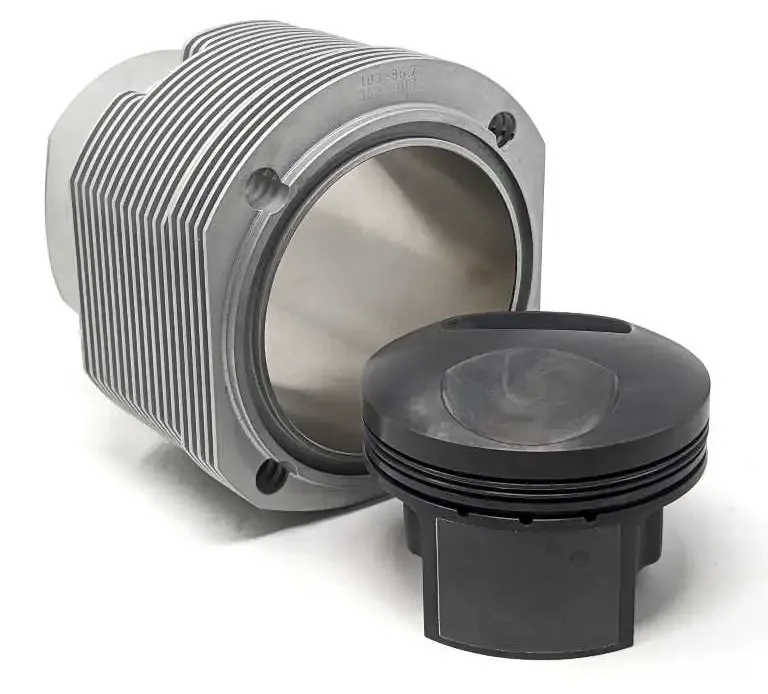
When it’s time to rebuild your air-cooled Porsche 911 engine, choosing the right Porsche pistons and Porsche cylinders is one of the most important decisions you’ll make. This guide covers everything from keeping your engine original to building a high-performance big-bore, twin-plug, or stroker setup.
Three key questions to answer first:
- Do you need (or want) to keep the engine completely original?
- Should you stay at stock displacement or increase it?
- How will you drive the car: street, occasional track days, or full competition?
Budget comes second. There is only one correct way to rebuild an air-cooled Porsche engine: the right way.
Table of contents
- Keeping It Original vs. Performance Upgrades
- Essential “hidden” upgrades every rebuild should include:
- Stock Displacement vs. Big-Bore Porsche Pistons & Cylinders
- Twin Plug Ignition and Cylinder Head Upgrades
- Camshaft Selection for Performance Builds
- High RPM Considerations and Connecting Rods
- Stroker Crankshafts and Large Displacement Builds
- Turbocharged Engine Piston and Cylinder Options
- Compression Ratio Guidelines and Engine Usage Planning
- Why Choose LN Engineering Nickies Porsche Pistons and Cylinders?
- Browse Mahle Motorsport Porsche Pistons and Cylinders
- Porsche Pistons and Cylinders Options by Engine
- Porsche 911 2.0 Piston and Cylinder Options
- Porsche 911 2.2 Piston and Cylinder Options
- Porsche 911 2.4 Piston and Cylinder Options
- Porsche 911 2.7 Piston and Cylinder Options
- Porsche 911 3.0 Turbo Piston and Cylinder Options
- Porsche 911 3.0 SC Piston and Cylinder Options
- Porsche 911 3.2 Piston and Cylinder Options
- Porsche 911 3.3 Turbo Piston and Cylinder Options
- Porsche 911 3.6 964 Piston and Cylinder Options
- Porsche 911 3.6 964 Turbo Piston and Cylinder Options
- Porsche 911 3.6 993 Piston and Cylinder Options
- Porsche 911 3.6 993 Turbo Piston and Cylinder Options
- Porsche 911 3.8 993 Piston and Cylinder Options
- How to Determine If Your Original Porsche Pistons and Cylinders Are Reusable
- Final Recommendations & Next Steps
Keeping It Original vs. Performance Upgrades
If originality or resale value is critical (concours restoration, etc.), you have two excellent options: source a second engine for modifications while preserving the original, or carefully recondition and reuse as many factory components as possible. If your Porsche’s engine has suffered a catastrophic engine failure or at the very least has significant damage, you might need to seek a suitable core as a starting point for engine build.
So at this point, we start at the first question. I will say that we should expand the question as follows – Do you want or need to keep the engine original? In some instances, the value of your Porsche can be negatively affected by altering the engine in any way, shape, or form. Thankfully, you have two solid options here. First, you could simply source another engine for your Porsche and mothball the original one. This should provide you the liberty to do pretty much anything you want with the new engine, but do so in such a way that you do not have to make any alterations to the car that would be permanent. Second, if you want or need to keep the engine original, depending on the condition of the engine to start with, you likely will be able to reuse or recondition most of the components in your Porsche engine using the rebuild process. Often the latter is the best option for someone who is doing a concours restoration or at the very least trying to preserve the originality of their Porsche.
That said, if you are reading this, more than likely you are looking for a little more than a stock engine, especially since it really doesn’t cost a lot more to do so in the long run. So that leads us to whether or not you want to keep your engine the stock displacement or not. The reason I ask this now is because you need to decide if you are ok making permanent changes – first to the engine, and second, to the ancillaries like ignition and fuel systems.
Most enthusiasts, however, are looking for more power and reliability. Shop all Porsche pistons here – upgrading to new Porsche pistons and Porsche cylinders is one of the most cost-effective ways to increase displacement, compression, and overall performance.
Essential “hidden” upgrades every rebuild should include:
Before we discuss pistons and cylinders, there are some changes that should be made regardless, including replacing the Dilivar cylinder head studs with steel ones. Also, if you have a 2.7 or earlier aircooled Porsche engine with a magnesium engine case, you must install case savers for the cylinder heads. It’s probably also a good idea with any magnesium case to shuffle pin, line bore, and deck the engine case. Even aluminum cases should have their decks resurfaced. These are all changes you can’t see but make a huge difference, even on a stock engine. At this point, these cases are all very, very tired. The later aluminum cases are much stronger and there are even new engine cases, including billet ones, available.
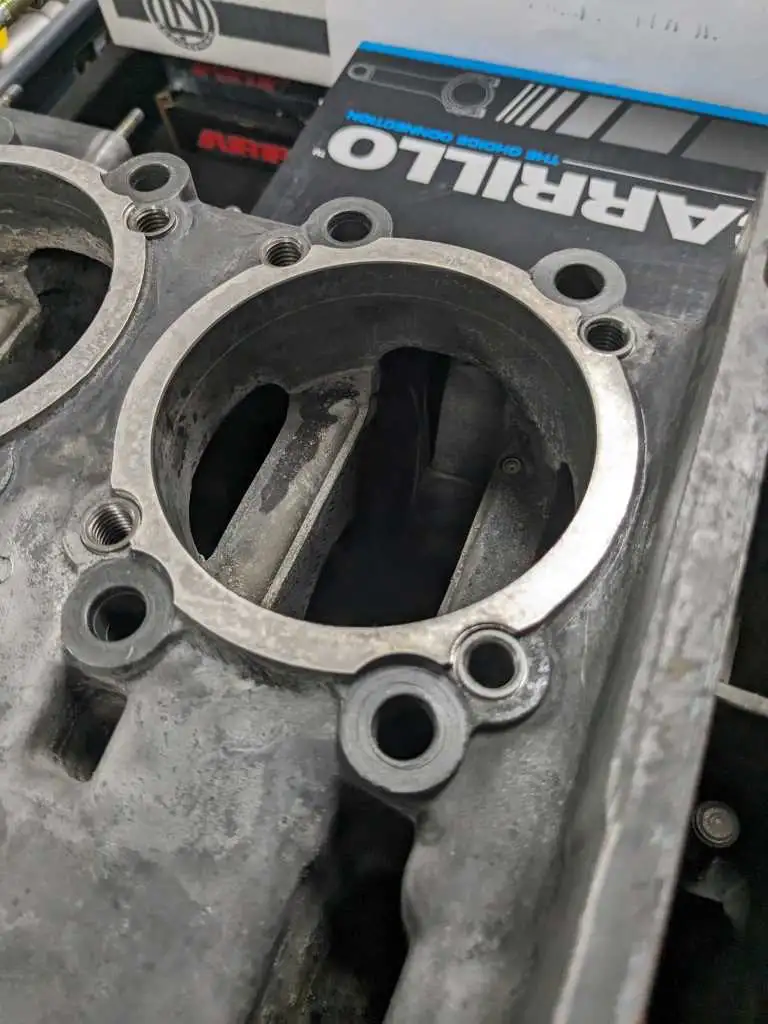
- Replace Dilivar cylinder head studs with high-strength steel.
- Install case savers on all magnesium cases (2.7 and earlier).
- Shuffle-pin, line-bore, and deck the case on all magnesium cases and aluminum cases that will see track use, high boost, or high rpm.
- Upgrade to coated main/rod bearings and consider a 964 or 911 Turbo oil pump on performance builds.
Another hidden upgrade that you’ll never see but will notice every time you drive your Porsche is the engine oil pump. A common upgrade on an earlier aircooled Porsche 911 engine is the 3.6 964’s oil pump, however a 911 Turbo oil pump is also a popular one. Although a GT3 oil pump was an inexpensive option for years, this pump isn’t the best choice unless you are building a full on race engine – a 964 or 911 Turbo pump is a better option, if you do want to upgrade your oil pump. Lastly, using coated main and rod bearings are another simple way to ensure you have a bulletproof bottom end.
Stock Displacement vs. Big-Bore Porsche Pistons & Cylinders
The easiest upgrade is a slip-fit big-bore kit that requires no permanent case modifications. For example, a 3.2 to 3.4 liter conversion (95 mm -> 98 mm) is straightforward with a new or reconditioned Mahle or new Nickies slip-fit Porsche pistons and Porsche cylinders set and typically allows a safe bump to 9.5:1 compression on pump fuel (with only a custom tune).
Bigger gains come from pairing upgraded Porsche pistons and Porsche cylinders with twin-plug ignition, performance cylinder heads, and optimized camshafts.
Twin Plug Ignition and Cylinder Head Upgrades
Once you’ve selected a solid foundation to build upon, choosing your piston and cylinder set is the next logical choice. For some, simply increasing displacement using a slip fit big bore kit is an easy upgrade that doesn’t require any permanent modifications to the engine, i.e. keeping to changes that are reversible.
For example, a 3.2 to 3.4 conversion from 95mm to 98mm can be done with a new or reconditioned Mahle or new Nickies slip fit piston and cylinder set. Usually this also allows for a bump in compression ratio up to 9.5:1, without needing to make any other adjustments with exception to tuning. With the stock fuel injection, this simply means getting a chip with a custom tune to adjust fuel and ignition. This does not require any permanent changes.
However, this does leave some sizeable performance gains on the table. On an aircooled Porsche engine, one of the biggest gains would be from going from single plug to twin plug ignition. This does require planning as you’ll want to run a higher compression ratio if you want to go twin plug. On pump premium unleaded fuel, you would usually go to 10.5:1 when running twin plug configuration over a single plug 9.5:1 compression ratio. The pistons won’t cost anything extra, but you will need to do the twin plug conversion, which can be done with either a twin plug distributor or going with a standalone programmable ignition or engine management (more on this later).
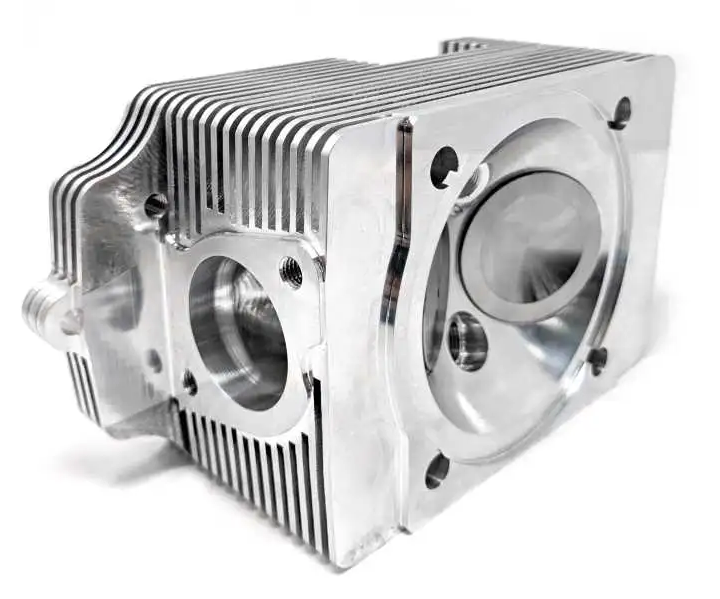
Second, the heads will need to be modified to accept twin plugs, unless you have a 964 or 993 3.6 or 3.8 that came with twin plugs from the factory. This will require you to permanently modify your cylinder heads, however you have several options here ranging from buying a used set of core heads to using new cylinder heads. If you go the route of a new set of heads, another benefit of this option is that you can bolt on a set of high performance cylinder heads that have larger ports and valves. By flowing more air, you will make even more power. These new performance cylinder heads are also often already set up with performance valve springs and retainers, so you can upgrade your camshafts.
While on the topic of cylinder heads, it’s important that if reusing your heads that you have them resurfaced. In an ideal world you would have two freshly machined surfaces – the cylinders and cylinder heads both so as to ensure proper sealing, especially since most air-cooled Porsche engines do not have real head gaskets. Some builders even choose to lap their cylinders and heads together, like one would lap a valve to a valve seat.
Camshaft Selection for Performance Builds
Sticking with the same example of a 3.2 to 3.4 conversion, a popular upgrade is to fit the engine with camshafts that have been ground to 3.6 964 specifications. One important consideration here is that with stock fuel injection, you need to make sure that the camshaft selected is compatible. Since the 3.6 964 has fuel injection, it makes perfect sense to use that as a performance camshaft when rebuilding and upgrading your 3.2 engine.
So you might wonder, what does using a larger camshaft provide you? Often, with increased displacement and compression, you can go to a larger camshaft with more lift and more duration, but you can’t have a camshaft profile with increased valve overlap, as this will negatively affect an engine’s vacuum signature and it’s idle and low speed operation. That’s why some people choose to ditch the factory fuel injection and go with carburetors or programmable electronic fuel injection, which would then allow the use of more aggressive camshaft profiles. However, there is a give and take – with larger cams, often you will sacrifice bottom end torque for high end horsepower. The same goes with larger ports and valves. That’s the reason we pair cylinder head and camshaft upgrades along with sizeable increases in displacement – combining them all wide the powerband while providing increased peak torque and horsepower.
High RPM Considerations and Connecting Rods
Along the same lines as this, increasing an engine’s maximum RPM also requires planning. Unlike modern engines with four valve cylinder head and variable camshaft timing and lift, with an aircooled Porsche engine do not have that kind of flexibility. To be able to have a high revving engine, this requires you to sacrifice bottom end torque for a peakier top end. A popular combination is a 2.5 short stroke 911 engine, where you would use a larger bore size and a smaller crankshaft. This alone doesn’t make an engine peaky – using larger cylinder heads and bigger camshafts on an engine with less displacement will naturally make an engine that favors high RPMs. Although this might sound great on paper, a smaller displacement, high revving engine will not have the driveability of a larger engine. An easy way to improve this is to use a 93mm cylinder rather than an 89 or 90mm, but you no longer have a true 2.5 liter. That’s why the old saying goes “there is no replacement for displacement.”
Increasing an engine’s maximum RPM requires other considerations, such as which connecting rods to use? The factory aircooled Porsche 911 connecting rods are usually good up to about 7400 RPM, but the original rod bolts should always be upgraded whenever rebuilding any Porsche engine. For RPMs over 7400 RPM, using an upgraded forged or billet steel connecting rod like those offered by CP-Carrillo or Pauter is advisable. These already come out of the box with upgraded connecting rod bolts, so they can indeed handle higher RPMs.
Back to the cylinder heads, when increasing the rev limit of the engine, it’s also necessary to upgrade the valve springs and retainers, even more so when putting in larger valves, so as to be able to control them at higher than stock RPMs. Just remember, heavier duty valve springs capable of controlling the valves at higher engine speeds does come at a cost – increased parasitic losses and increased oil temperatures. So going faster doesn’t always require spinning your Porsche engine to higher RPMs. In fact, increased displacement again is the simplest way to increase your air-cooled Porsche’s efficiency, especially coupled with moderate improvements to cylinder heads, camshafts, and increases in compression ratio, where permissible.
Stroker Crankshafts and Large Displacement Builds
To increase displacement, the simplest way is to increase bore size. Again, there are limits to what you can do without having to modify the engine case to accept larger cylinders. Again, with the example of the 3.2, if you go the route of a machine in set of cylinders, displacement can be increased to 3.8 liters without any issue. Granted, you will have to make sizeable changes to the fuel system, intake, and exhaust so as to allow the engine to be tunable and also so that it can breathe.
Although pricey, it’s possible to even go bigger, replacing the factory crankshaft with a 76.4 or even 80.4mm crankshaft. One problem with using a stroker crankshaft however is the rod to stroke ratio. As you increase the stroke, the engine must remain a fixed width. This means that you have to run a very short piston and also run a shorter connecting rod, both of which come at a cost to longevity. Although possible, you could make the engine wider, but this adds significant complexity and required lots of custom parts to make it all work, not to mention the engine may no longer fit in your engine bay, depending on how much wider you make it. A popular example is using the GT3RS 4.0 80.4mm crankshaft in a 3.6 964 or 993. As aforementioned, this requires a very short piston, which reduces stability, however adding wrist pin offsets often helps. However, due to poor rod to stroke ratio and high side loading at BDC (bottom dead center) changeover when the piston changes direction, a minimum of 131mm long connecting rod with no larger than a 104mm bore size should be used. Again, if you make the engine wider, you can correct this, but this isn’t for the faint of heart. Most people choose to retain the stock 3.6 crankshaft and connecting rods paired with a machine in set of big bore pistons and cylinders when upgrading their 964 and 993 engines.
All Porsche crankshafts should undergo magnetic inspection to look for cracks and should have their journals polished, at the very least. Cross-drilling of Porsche crankshafts is not necessary or recommended. Although a horizontally opposed engine with a flat plane crankshaft is inherently balanced, dynamic balancing a rotating assembly does improve durability and longevity, not to mention, delivers an engine that is smooth as silk.
Turbocharged Engine Piston and Cylinder Options
Now that we’ve discussed normally aspirated Porsche 911 engines and common upgrades, now is as good a time as any to discuss Turbo piston and cylinder options. Adding displacement to an air-cooled Porsche 911 Turbo engine helps with off-boost torque which equates to improved drivability. However, with a boosted engine, you don’t necessarily need to go too big on displacement – there are diminishing returns. With higher cylinder pressures, it’s better to back off a tad on bore size. You can always increase boost, again within reason. For example, the most popular option for a 3.3 Turbo is going to a 3.4, which involves an increase from 97mm to 98mm. Again, some planning must go into this before you start buying parts. The 3.3 Turbo was single plug, so going to a twin plug configuration should be your next upgrade. Then it’s the turbo and intercooler that should be upgraded, and depending on how much boost you are planning on running, you’ll want to flame ring the cylinder heads. A popular twin plug combination is a 3.3 to 3.4 liter twin plug conversion at 98mm at 8.0:1 compression ratio with 1.0 bar of boost (approximately 15 psi). If you want to run more boost or compression on any aircooled Porsche 911 engine with forced induction, there’s no getting around flame ringing the cylinders and heads. Flame ringing does limit how big of a bore size you can run, so please do keep this in mind. It’s too easy to increase the boost later on, so don’t assume that you’ll just stop at 1 bar of boost. It’s best to over-build the engine, just in case.
Same goes for the last question – how is the engine going to be used. A car that will be street driven is completely different than one that might see an occasion Drivers Education event or even one that will be tracked heavily. A decision must be made in advance how an engine is going to be used so as to plan accordingly as to what must be done to make an engine live. Case in point – if an engine will only be run on race gas, then you can run higher compression ratios and more boost. However, unlike a modern engine, Porsche engines do not have knock detection that can pull timing in the event that detonation is detected. The only exception to this is the 3.6 and 3.8 964 and 993 – both of which had even higher compression ratios than their predecessors due to advances in engine management. That’s not to say you can’t use modern programmable fuel injection with knock sensing on your older Porsche, but that adds significant cost and complexity. But due to it’s popularity, LN Engineering’s Nickies have come with knock sensor bosses to support this conversion.
Compression Ratio Guidelines and Engine Usage Planning
With everything discussed up until this point, compression ratios also need to be touched on again. There are some basic rules of thumb for compression ratio we live by on air-cooled Porsche engines, fuel injected but without knock sensing, assuming pump premium unleaded fuels:
- Single plug, normally aspirated – 9.5:1
- Twin plug, normally aspirated – 10.5:1
- Single plug, forced induction, intercooled – 7.5:1
- Twin plug, forced induction, intercooled – 8.0:1
For unleaded 100 octane race gas, you can typically add 1.0 point to a normally aspirated engine or 0.5 point to an engine with forced induction.
For engines with forced induction, increasing the size and efficiency of the air to air intercooler is very helpful, but some find that they still need to switch to an air to water intercooler and even add water/methanol injection or run E85 fuels, all of which add significant complexity.
By no means do we recommend adding a supercharger or turbocharger to any normally aspirated Porsche engine, air-cooled or otherwise. That’s a hand grenade with the pin removed!
Remember, the 3.6 and 3.8 964 and 993 normally aspirated engines were the first air-cooled Porsche engines with knock sensing, so they came with a higher 11.0:1 compression ratio from the factory that could safely be run on pump premium unleaded. When we rebuild these engines, we usually bump the compression ratio up by half a point to 11.5:1, or if run on race fuel, to 12.5:1. The 3.6 and 3.8 liter 964 and 993 engines came with heads that were already twin plugged, but it is very easy to modify single plug Porsche cylinder heads to twin plug, including modifying the valve covers, when rebuilding them. LN Engineering has a full service Porsche engine machine shop that can take care of this work for you.
Lastly, when discussing compression ratios, we again are making several assumptions. Stated compression ratio values are based on deck height measurements assumed to be .040″ or 1mm and cylinder head chamber volumes:
- 2.0 through 2.7 air-cooled Porsche 911 engines have cylinder head chamber volumes of 68cc
- 3.0SC through 3.8 air-cooled Porsche 911 930/964/993 engines have cylinder head chamber volumes of 90cc
This can vary depending on how many times the heads have been flycut or if they have been modified. Aftermarket cylinder heads may also have different chamber volumes than original ones. Regardless, it’s up to the person assembling the engine to measure the cylinder head chamber volumes and deck heights as to be able to properly verify actual compression ratios. Base shims can be used to increase deck height and effectively reduce compression ratio, but exceeding a 1.5mm or .060″ deck height is not recommended.
There are exceptions to these rules, as always, which can be affected by other variables, so it’s always important to speak to an engine builder, and tuner if applicable, in advance of making any engine plans.
One more word of caution – higher RPM and higher compression ratios do make more power but at the expense of durability, longevity, and reliability, not to mention the cost associated to get there. Some modifications simply make no sense and are little more than for bragging rights. We want you to build something that is both powerful AND durable. Although many of the modifications and parts discussed here aren’t offered by LN Engineering, they are important nonetheless when rebuilding an aircooled Porsche 911 engine. As such, we welcome you to reach out to us to discuss your plans and would be more than happy to review them with you. If there is something we cannot help you with, we for sure know the right person to send you to.
Why Choose LN Engineering Nickies Porsche Pistons and Cylinders?
LN Engineering’s Nickies are the premium choice for air-cooled 911 engines. Made from billet aluminum with NSC (nickel silicon carbide) plating, they offer:
- Superior thermal conductivity and cooling
- Up to 50% greater strength and ductility than OEM cast aluminum
- Optimized for use with stronger 2618 forged pistons
- Knock-sensor bosses on many kits
- Slip-fit and machine-in big-bore options for virtually every 911 displacement
- Proven in street, track, and high-RPM applications
Browse all Nickies Porsche pistons and Porsche cylinders >
Browse Mahle Motorsport Porsche Pistons and Cylinders
For those who prefer OEM-style or factory-matched components, Mahle Motorsport piston and cylinder sets are also an excellent choice and are available in slip-fit and machine-in configurations for virtually every air-cooled 911 engine.
Porsche Pistons and Cylinders Options by Engine
Porsche 911 2.0 Piston and Cylinder Options
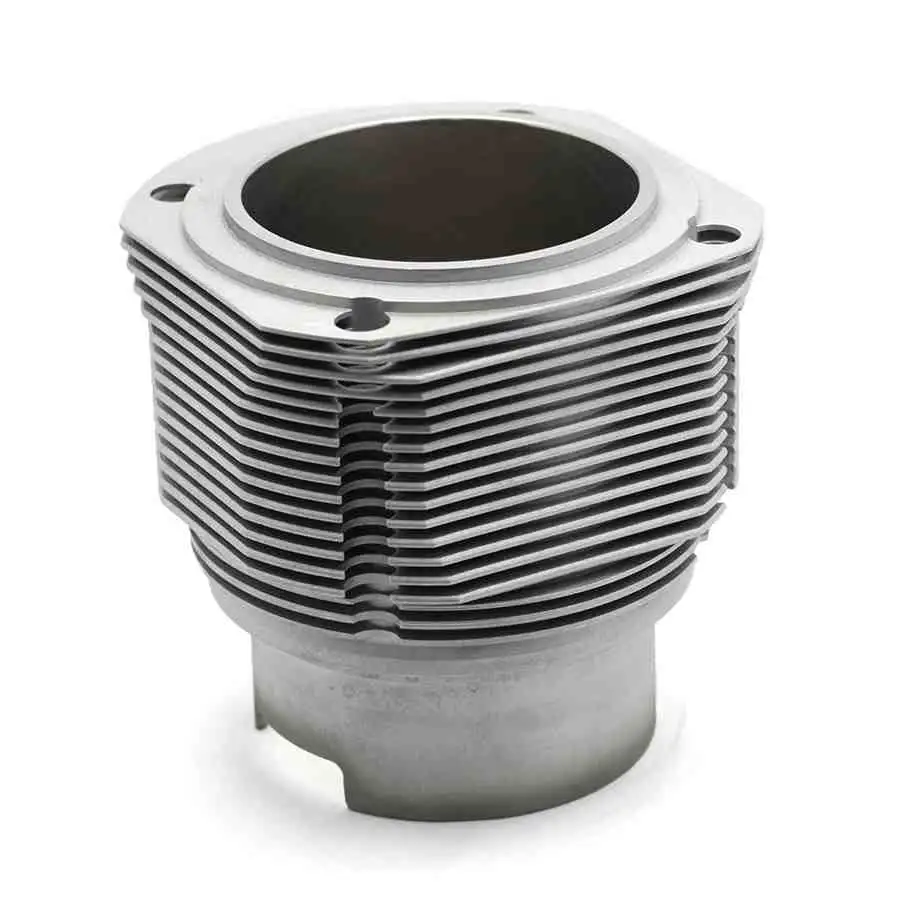
- Re-ring pistons
- Bore out original cast iron or biral type cylinder and fit with 1mm oversized aftermarket 81mm pistons
- Replace with Nickies cylinder and piston set.
- Replace with Mahle cylinder and piston set.
Porsche 911 2.2 Piston and Cylinder Options
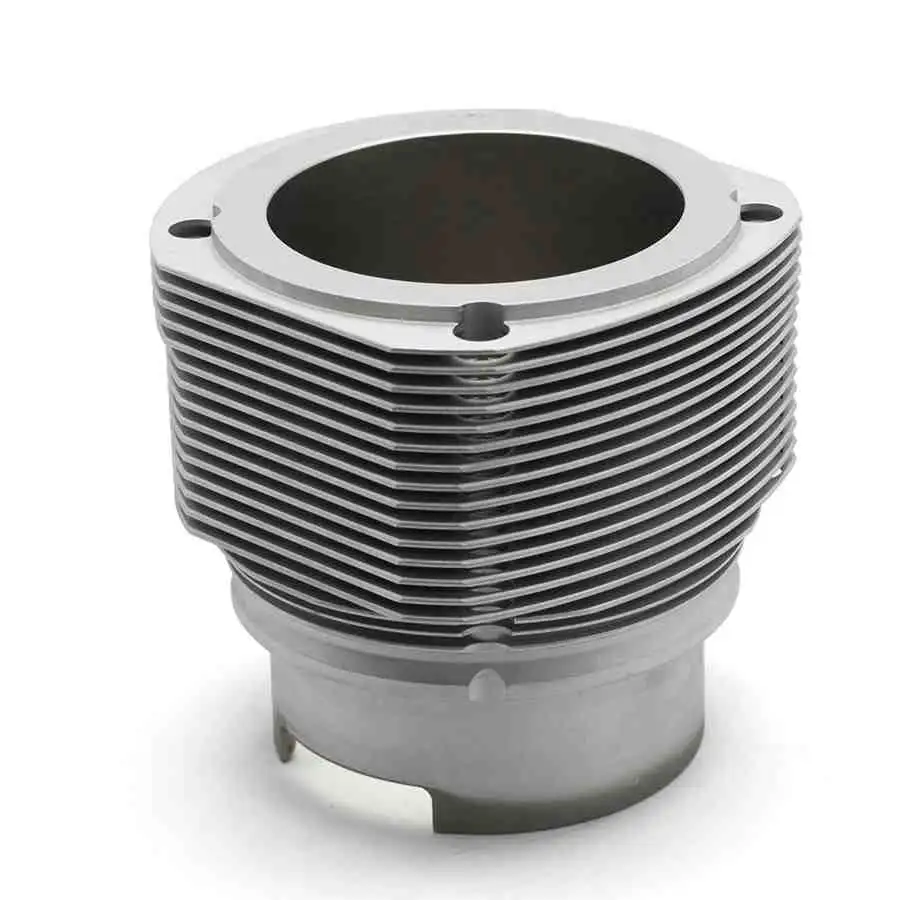
- Re-ring pistons
- Bore out original cast iron or biral type cylinder and fit with 1mm oversized aftermarket 85mm pistons
- Replace with Nickies cylinder and piston set.
- Replace with Mahle cylinder and piston set.
Porsche 911 2.4 Piston and Cylinder Options
- Re-ring pistons
- Bore out original cast iron or biral type cylinder and fit with 1mm oversized aftermarket 85mm pistons
- Replace with Nickies cylinder and piston set.
- Replace with Mahle cylinder and piston set.
Porsche 911 2.7 Piston and Cylinder Options
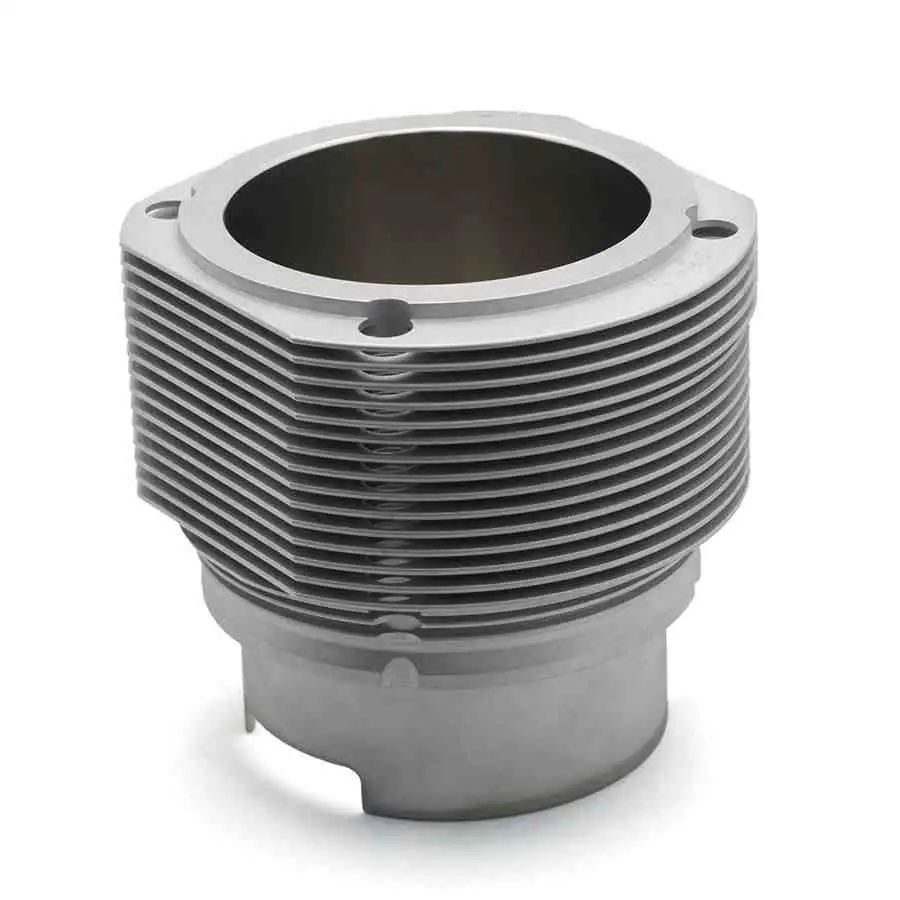
- Re-ring pistons with Alusil cylinders
- Re-ring pistons with Nikasil cylinders
- Recondition original cylinders using Nikasil or similar bore coating and fit with new aftermarket pistons in the stock 90mm bore size
- Replace with Nickies cylinder and piston set
- Replace with Mahle cylinder and piston set.
Porsche 911 3.0 Turbo Piston and Cylinder Options
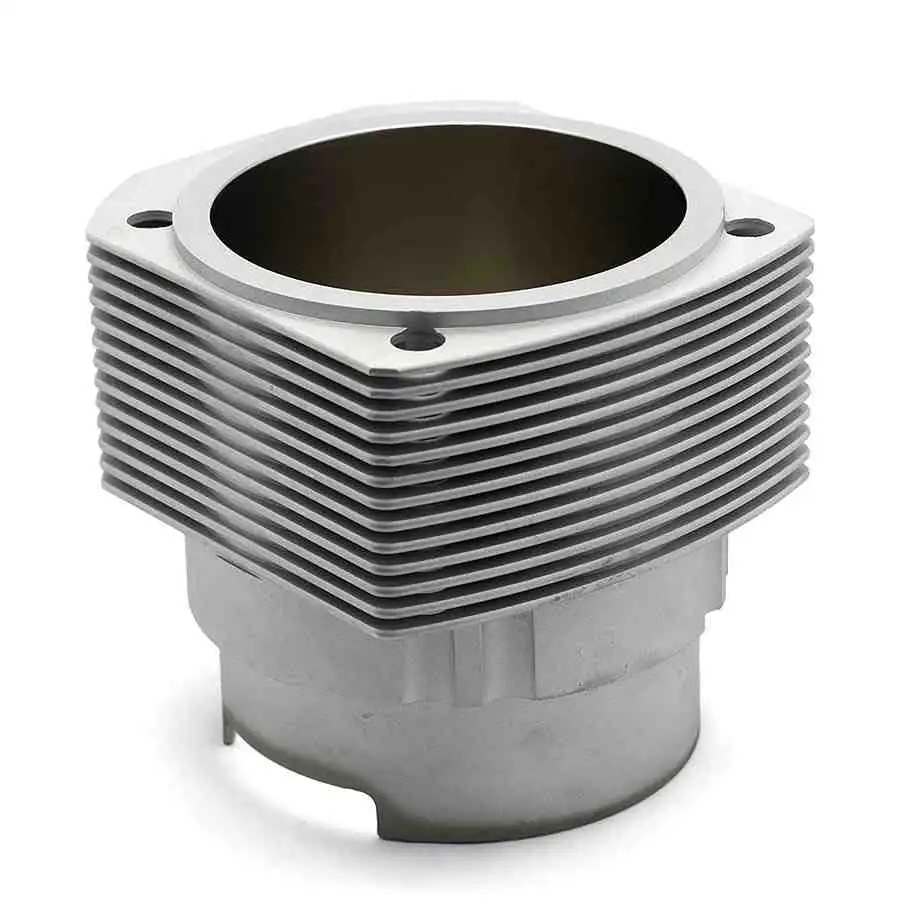
- Re-ring pistons with Nikasil cylinders
- Recondition original cylinders using Nikasil or similar bore coating and fit with new aftermarket pistons in the stock 95mm bore size
- Replace with Nickies cylinder and piston set.
- Replace with Mahle cylinder and piston set.
Porsche 911 3.0 SC Piston and Cylinder Options
- Re-ring pistons with Alusil cylinders
- Recondition original cylinders using Nikasil or similar bore coating and fit with new aftermarket pistons in the stock 95mm bore size
- Replace with Nickies cylinder and piston set
- Replace with Mahle cylinder and piston set.
Porsche 911 3.2 Piston and Cylinder Options
- Re-ring pistons with Nikasil cylinders
- Recondition original cylinders using Nikasil or similar bore coating and fit with new aftermarket pistons in the stock 95mm bore size
- Recondition original cylinders using Nikasil or similar bore coating in a 3mm oversize and fit with new aftermarket pistons in a 98mm bore size
- Replace with Nickies cylinder and piston set.
- Replace with Mahle cylinder and piston set.
Porsche 911 3.3 Turbo Piston and Cylinder Options
- Re-ring pistons with Nikasil cylinders; if your 3.3 Turbo has half-finned cylinders, you should replace them with fully finned cylinders – half-finned cylinders should not be reused.
- Recondition original cylinders using Nikasil or similar bore coating and fit with new aftermarket pistons in the stock 97mm bore size
- Recondition original cylinders using Nikasil or similar bore coating in a 1mm oversize and fit with new aftermarket pistons in a 98mm bore size
- Replace with Nickies cylinder and piston set.
- Replace with Mahle cylinder and piston set.
Porsche 911 3.6 964 Piston and Cylinder Options
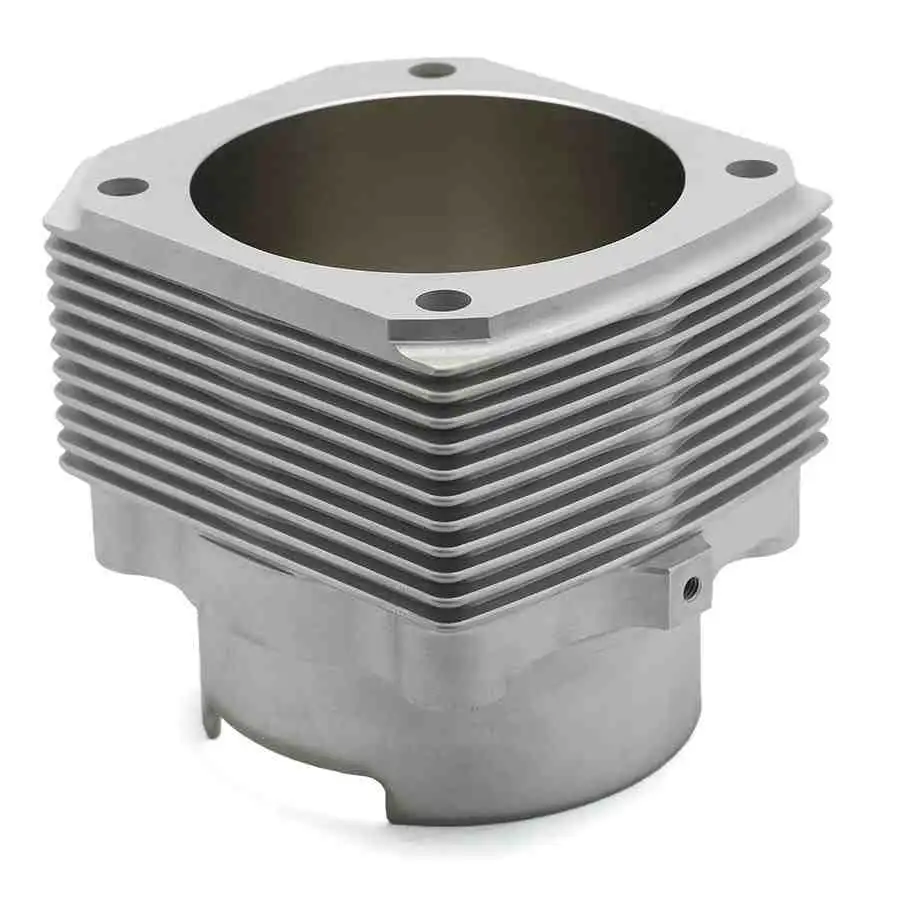
- Re-ring pistons with Nikasil cylinders; if your 3.6 964 engine has not been updated to the later 993 style cylinders, denoted by their flat tops, you should highly consider replacing your original cylinders and have the cylinder heads machined to match the updated cylinder configuration.
- Recondition original cylinders using Nikasil or similar bore coating and fit with new aftermarket pistons in the stock 100mm bore size
- Recondition original cylinders using Nikasil or similar bore coating in a 2mm oversize and fit with new aftermarket pistons in a 102mm bore size
- Replace with Nickies cylinder and piston set.
- Replace with Mahle cylinder and piston set.
Porsche 911 3.6 964 Turbo Piston and Cylinder Options
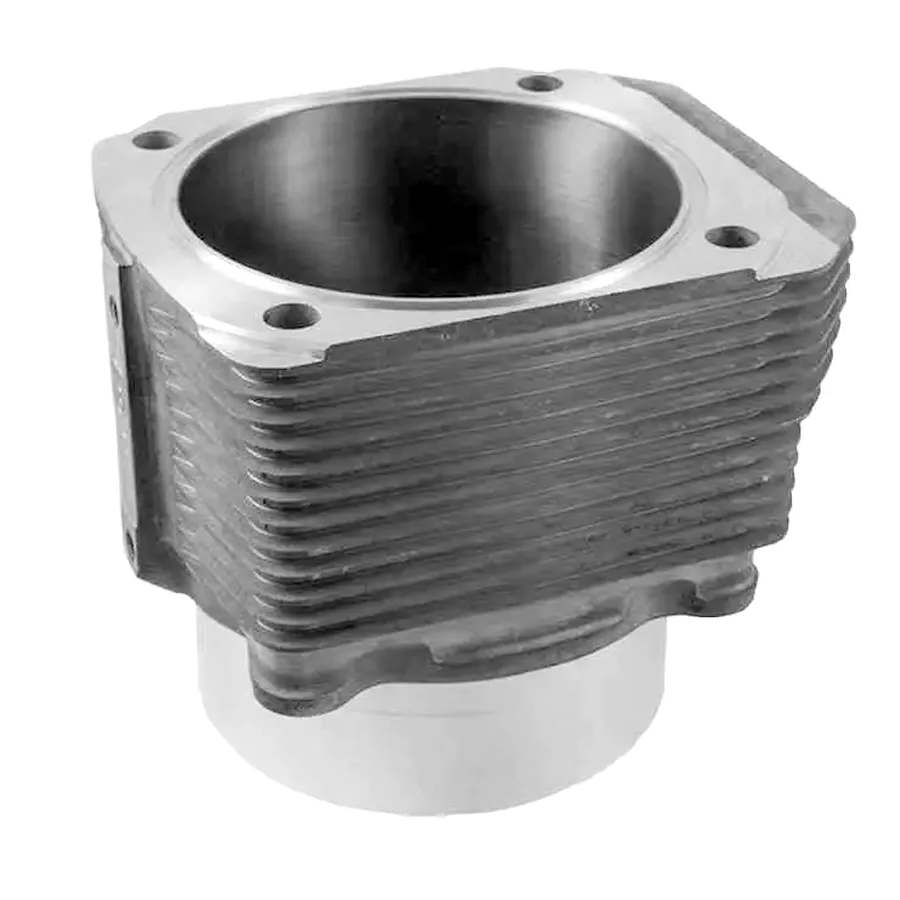
- Re-ring pistons with Nikasil cylinders
- Recondition original cylinders using Nikasil or similar bore coating and fit with new aftermarket pistons in the stock 100mm bore size
- Recondition original cylinders using Nikasil or similar bore coating in a 2mm oversize and fit with new aftermarket pistons in a 102mm bore size
- Replace with Nickies cylinder and piston set.
- Replace with Mahle cylinder and piston set.
Porsche 911 3.6 993 Piston and Cylinder Options
- Re-ring pistons with Nikasil cylinders
- Recondition original cylinders using Nikasil or similar bore coating and fit with new aftermarket pistons in the stock 100mm bore size
- Recondition original cylinders using Nikasil or similar bore coating in a 2mm oversize and fit with new aftermarket pistons in a 102mm bore size
- Replace with Nickies cylinder and piston set.
- Replace with Mahle cylinder and piston set.
Porsche 911 3.6 993 Turbo Piston and Cylinder Options
- Re-ring pistons with Nikasil cylinders
- Recondition original cylinders using Nikasil or similar bore coating and fit with new aftermarket pistons in the stock 100mm bore size
- Recondition original cylinders using Nikasil or similar bore coating in a 2mm oversize and fit with new aftermarket pistons in a 102mm bore size
- Replace with Nickies cylinder and piston set.
- Replace with Mahle cylinder and piston set.
Porsche 911 3.8 993 Piston and Cylinder Options
- Re-ring pistons with Nikasil cylinders
- Recondition original cylinders using Nikasil or similar bore coating and fit with new aftermarket pistons in the stock 102mm bore size
- Replace with Nickies cylinder and piston set.
- Replace with Mahle cylinder and piston set.
Full selection of current Nickies kits and specific part numbers are listed on our Porsche & VW Aircooled Cylinders and Pistons page. Contact us for custom configurations.
How to Determine If Your Original Porsche Pistons and Cylinders Are Reusable
If you have made it this far, you might also want to learn how to determine if your original Porsche pistons and cylinders can be reused.
In air-cooled Porsche 911 engines, several cylinder technologies have been employed over the years, along with either cast or forged aluminum pistons:
- Cast iron Porsche cylinders
- Biral Porsche cylinders
- Alusil Porsche cylinders
- Nikasil Porsche cylinders
As you can see in the above list, there was a progression in the development of cylinders for aircooled Porsche 911 engines. Although not used in Porsche 911 engines, Ferral and Chromal cylinders were also employed by Porsche in earlier aircooled Porsche 356 engines. Ferral cylinders utilized a splatter coat cast iron bore in an aluminum cylinder, whereas Chromal cylinders (dimpled chrome) used a hard chrome plating in an aluminum cylinder. The primary reason for doing so was for increased thermal efficiency and superior cooling, when compared to a cast iron cylinder.
Cast iron Porsche cylinders were abandoned early and were used in lower output engines. Biral type Porsche cylinders that had cast iron liners with aluminum fins added some cooling, but these too were short lived. Porsche employed Alusil and Nikasil all-aluminum cylinders exclusively by the time the 2.7 rolled out.
Cast iron cylinders can be bored out and honed 1mm to allow fitment of new aftermarket pistons, specifically forged 4032, due to expansion rates. Due to cast iron’s poor thermal conductivity and lack of cooling, they are often replaced on performance builds with fully aluminum cylinders. Likewise, biral cylinders really should be discarded, although they technically can be over-bored by 1mm just like cast iron cylinders. Porsche engine builders have long since chosen to replace them instead of retaining them, except on concours restorations that require keeping them for originality’s sake.
Alusil, also known as Reynolds A390, is a hypereutectic aluminum. In layman’s terms, this means that it is an aluminum with high levels of silicon. Through a special process, the silicon particles are exposed and then an iron clad piston is used. Alusil is not a coating – Alusil cylinders in essence have a raw, uncoated aluminum cylinder bore. If it were not for the iron clad coating on the piston and the exposed silicon particles on the bore, the whole system would not work. The Alusil Porsche cylinders used in the 2.7 and 3.0SC engines proved to be very durable over time. The only issue we ever see has to do with re-ringing these cylinders or reconditioning them. Alusil cylinders require a very special process to remove the surface aluminum and expose the silicon particles, followed by close inspection to make sure the exposed silicon particles aren’t fractured. Alusil cylinders do not have or require a visible cross-hatch, so by no means should you try to conventionally hone them. If worn out or incorrectly reconditioned with more than 30-40% of the silicon particles fractured in a given area, the required tribofilm to support the pistons and rings can’t be supported. This results in cylinder bore scoring, something very much familiar to owners of modern water-cooled Porsche engines with Alusil and Lokasil cylinders. If not, just Google “Porsche bore scoring” and you’ll be in for an education.
Air-cooled Alusil Porsche cylinders are most often replaced with new Nikasil cylinders or can be coated or plated to provide a suitable cylinder surface. However, since these cylinders have cylinder head sealing ring grooves, engines must retain the stock bore size. Although for some that is adequate, most Porsche owners opt for increasing the displacement of their Porsche engine as this doesn’t add much cost to a rebuild and the gains are noticeable.
Unlike Alusil cylinders, Nikasil cylinders do have a coating on the cylinder bore. It’s actually a plating comprised of nickel, silicon, and carbide. This is a very hard, durable surface. After honing, the plating typically is about .004″ thick. Given how thin the plating is, these cylinders have excellent thermal efficiency and greatly improve cooling on an aircooled engine. Porsche Nikasil cylinders have long been regarded as very durable, often capable of being reused multiple times due to how hard the Nikasil plating is. Where there is no visible honing marks on an Alusil cylinder, there is visible cross-hatch on a Nikasil cylinder. However, these cylinders too require special finishing with diamond stones and must have what is considered an extreme plateaued surface. Nikasil cylinders must be treated very different from a cast iron cylinder in that regard.
With all of this talk about cylinder bore measurements, it’s important to also discuss torque plates. Not to dive off the deep end, but this topic is very controversial. You’ll see some people claim that you can’t accurately measure cylinders unless they are in torque plates. However, considering most air-cooled cylinders aren’t torque plate honed, we do not believe that is a valid concern. Air-cooled Porsche cylinders, as delivered by Porsche and made at the Mahle or Kolbenschmidt factory, have cylinder bores that are perfectly round when measured static in free air. This is the same way we hone our Nickies cylinders and any other air-cooled cylinders we manufacture or recondition. We’ll simply pose a question for you to consider. How does a torque plate simulate the clamping of the cylinder head on a cylinder when you have large differences in cylinder temperatures top to bottom and left to right, and considering you have forced air blowing from the top of the engine, down over the cylinders? Porsche tried to control this by using Dilivar studs and also mixing steel and dilivar studs. We all know what happened there. How about the 3.3 Turbo’s half finned cylinders, biasing the fins to the bottom side of the cylinder nearest the exhaust, with no fins on top? Those ended up all getting replaced with fully finned cylinders, like other air-cooled Porsche engines. At the end of the day, steel head studs in all positions with a fully finned cylinder that is honed perfectly round is the best option for an aircooled Porsche engine.
As with most air-cooled Porsche cylinders, the wear limit for ovality and taper is about .002-.0025″, meaning that the cylinder shouldn’t be re-ringed if it is out of specification. Likewise, if the cylinders have any scratches you can catch with your fingernail, they need to be reconditioned or replaced. When Porsche engines have been overheated or if there is visible engine damage from detonation, the pistons and cylinders should be replaced rather than be reconditioned. Even with normal operation, a reconditioned air-cooled cylinder will not have the same service life as a new one, even more so if you decide to increase the bore diameter of your used Porsche cylinder during the reconditioning process.
As often is the case, damage might be localized to a single cylinder, but care must be taken to inspect all your Porsche pistons and cylinders before determining if they are suitable for reuse during a rebuild. Single replacement cylinders can be sourced, however it is critical to verify they are the same height group. On a factory Mahle cylinder, a triangle with a number will denote the height group. However, considering that many of these engines have been rebuilt several times by now, it is not recommended that you solely rely on these identifying marks. The reason for this is that the Nikasil re-plating process involves a pre-treat process that can erode the aluminum. Cylinders may have also been turned or ground to refresh the sealing surface, which again can change the height of the cylinders. It is best to use a precision height gage or a micrometer to check that all cylinders are within .0005″ of each other.
How to Select the Right Pistons to Match Your Porsche Cylinders and Application
Similarly, there are groupings for pistons. Don’t assume that you can take a new piston and put that into a used cylinder or vice versa. Like with cylinder heights, it’s critical to measure the cylinder bore and the piston diameter to verify that you have the correct piston to cylinder clearance. Too little and the piston will seize in the bore. Too much and you’ll have piston slap and poor ring seal. Required piston to cylinder clearances and where you measure them can vary for multiple reasons:
- Is the piston cast or forged?
- Are you using an aftermarket piston?
- What alloy is the piston made from?
- Where is the gage point on the piston?
- What type of cylinder are you using?
To some, there might not be a huge difference between pistons – but there is. First and foremost, always refer to manufacturer recommendations. There are too many variables to cover everything here, but we will go over some of the basic fundamentals of pistons.
Is the piston cast or forged? Typically, a cast piston will require less clearance than a forged one. Most forged pistons use a hypereutectic high silicon alloy to allow for tighter piston to cylinder clearances by better controlling expansion rates. Forged typically require more clearance.
That leads us to the next set of questions. Are you using an aftermarket piston and what alloy is that piston made from? There are literally dozens of options when it comes to aftermarket pistons. Pistons can be cast or forged. Forged can come in high silicon 4032 or no silicon 2618 alloys, the latter requiring more clearance than a high silicon alloy. Most aftermarket forged pistons are made from 2618 due to its higher strength and ability to handle higher temperatures.
Knowing where to measure the piston is equally critical. The design of the piston also has some bearing on clearance and suitability for a given application. Most of the pistons are considered a full round or slipper skirt. Mahle’s “box skirt” is also popular. These are the most stable, but even between them there can be significant differences, especially when it comes to how the piston skirt is shaped. Piston skirts are cammed, meaning they aren’t perfectly round. This is to accommodate for expansion and thermal gradients, so it’s critical that when you measure your piston to cylinder clearance that you know the correct gage point on the piston.
Another word of caution- pistons originally from an Alusil cylinder set cannot be used in non-Alusil cylinders. Likewise, pistons intended for non-Alusil cylinders aren’t compatible with Alusil cylinders due to the lack of the required piston coating. Mahle Motorsport, for example, does offer aftermarket forged pistons with the required Ferroprint coating to allow the use of an aftermarket forged piston in an Alusil cylinder, but most people just opt for new pistons and cylinders rather than going through all that trouble (and cost).
When talking about piston to cylinder clearances, what type of cylinder you use also affects this. Typically, with cast iron or biral type cylinders, a high silicon cast or forged piston is preferable since cast iron does not expand as much as aluminum. This requires larger clearances, so if you go with a forged 2618 piston, you will need to run significantly more clearance than you would otherwise need to, resulting in audible piston slap in most cases.
Aluminum cylinders on the other hand allow for tighter piston to cylinder clearances as the piston and cylinder are expanding at a similar rate. Factory Porsche air-cooled cylinders are cast from a high silicon alloy and are paired with cast or forged 4032 pistons with high silicon content. When fitting aftermarket pistons, a slight increase in clearance is required. Even more confusing, when running an aftermarket aluminum cylinder, this might also differ, again due to alloy. Case in point, LN Engineering’s Nickies cylinders are best suited to a 2618 alloy that doesn’t have any silicon content, resulting again in matched expansion rates. In general, the tighter clearances aluminum cylinders and aluminum pistons allow for not only make for quieter operation, but also to make more horsepower. Again, that’s why Porsche ditched the cast iron and biral cylinders very early on.
How to Choose the Right Piston Rings for your Porsche Engine
Another consideration as to whether or not you can or should reuse your original Porsche pistons and cylinders are the piston rings themselves. This one is simple – you might not be able to source replacement piston rings, so you might end up having to buy new pistons or a completely new piston and cylinder set for your Porsche engine when it comes time to rebuilding it. Another often overlooked component is ring compatibility. Cast iron cylinders have the greatest flexibility when it comes to ring selection. If it fits, it ships. Alusil cylinders are pretty flexible- cast or ductile iron, hard chrome, or CrN (chromium nitride) rings all work well here. Now when it comes to Nikasil, that’s a completely different story.
The most common choices for piston rings on Nikasil are cast or ductile iron and soft gas-nitrided steel rings. By no means should you ever run a chrome ring. Same goes for DLC or any other hard piston ring face coatings, as this more or less guarantees mutual annihilation. Another often overlooked variable here is surface finish on the honed Nikasil cylinder bore. Nikasil, although very smooth by comparison to honed cast iron bore surfaces, can be fine tuned depending on what ring will be run. When using a soft cast or ductile iron ring, you can get away with an even smoother surface, whereas a carbon steel ring can benefit from slightly more peak and valley, although all these surfaces would still be classified as extreme plateau.
So why does Nikasil need an extreme plateau? Since Nikasil is very hard, roughly 400 vickers, it has to be diamond honed. This very hard surface is not very forgiving, especially during break-in. In fact, very little break-in does occur between the rings and the cylinders, unlike with iron cylinder bores. Extreme plateau honing removes all the peaks that normally would wear during break-in on an iron bore. On Nikasil, if those peaks are left after honing, they will destroy the piston rings, due to Nikasil being so hard. Likewise, although Nikasil is considered oileophillic, valleys introduced into the bore surface during honing to help hold oil are much shallower than what you often will see on an iron bore, making Nikasil cylinders much more susceptible to cylinder washdown. Remember fuel is not a lubricant!
So you might ask why we are talking about surface finish and washdown as a consideration for determining if you can re-use your original cylinders. Although Nikasil is well known for having a long life, it will and does wear, just at a much slower rate. Assuming you don’t have any scratches that you can catch with your fingernail, the cylinders are out of round, or you have excessive taper, you might end up with a surface that is too smooth that it may be very hard to get the rings to seat during break-in. Unfortunately, it’s not as easy as re-honing a Nikasil cylinder, especially an aluminum one. The reason for this is that the piston to cylinder clearance is very tight, and to correct surface finishes, you will need to hone out enough of the plating that the end result is you will have too much clearance. And since the plating is only .004″ thick, you can’t bore and hone it to the next oversize like you can with cast iron. Although the factory manual and specifications call out limits for ovality and taper, you won’t find such a tolerance for surface finishes. Most builders will not have access to a profilometer to validate this.
Tip: If you do have access to a profilometer, measuring the surface of the bore out of ring travel will give you a true reading for what the surface finish was new, allowing you to compare to the in ring travel surface finish traces, so as to measure the actual wear. With Nikasil bores, when the RpK gets below 4 microinches and RvK gets below 10 microinches, it gets infinitely more challenging to successfully break in a set of piston rings. Add in ovality to the mix, and you may never seat those rings.
25-30 years ago, you often would find original Porsche pistons and cylinders that were safe to reuse, simply requiring re-ringing of the pistons and deglazing of the bores. Nowadays, it’s a safe bet that you’ll need to recondition your Porsche Nikasil cylinders, or simply replace them with new ones, unless you know what you are doing intimately. The risk is too great, simply considering the man hours and consumables required to redo an engine if you have to pull it back out of the car to disassemble to correct for an error, big or small.
How do you know if what you have is right unless you can measure it and understand what it is you are looking at? If you are unsure if your Porsche’s pistons and cylinders are re-useable or not, LN Engineering does offer an inspection service where we will provide you a detailed workup of your existing set, same as what our new Nickies Porsche pistons and cylinders go through.
Prepping your Porsche engine case
Basics include checking to see if the case needs to be line bored or honed for oversized bearings, which most people already know to do.
On magnesium engine cases, installing case savers for the cylinder head studs is a must.
If building a performance engine with a magnesium engine case, shuffle pinning is also highly recommended.
Often overlooked is the cylinder deck. We often find that engines that have been in service for many decades will have some amount of distortion in the cylinder deck where the cylinders sit and seal against. Modern sealants are amazing, but this surface should be checked and if there is any runout, it should be re-machined to ensure it’s flat.
Additionally, if going with machine-in cylinders, you’ll have to have the engine case registers opened up for the larger cylinders. In some cases the cylinder heads themselves will also need to be opened up or modified for the new cylinders.
With the Porsche 911 3.6 964 and 993 engines, it is common to have the case spigots machined for o-rings for the machine in cylinders to aide in sealing and preventing oil leaks. If you do this modification, we still recommend using sealant on the cylinder bases as a precaution. No one likes oil leaks. However, o-ringing the case is not required.
Final Recommendations & Next Steps
Higher displacement, compression, and RPM all make more power – but they also trade off some durability and longevity. The goal is always a powerful AND reliable engine, so careful planning needs to go into every Porsche engine rebuild.
LN Engineering’s Nickies Porsche pistons and Porsche cylinders are engineered specifically for this balance and are the preferred upgrade for builders who want maximum performance and thermal efficiency.
Ready to choose your Porsche pistons and Porsche cylinders?
Browse Nickies Porsche Cylinders & Complete Sets
Browse Mahle Motorsport Porsche Pistons & Cylinders
Contact our team today – we’re happy to review your engine plans and recommend the perfect setup for your goals.