Porsche Models without Bore Scoring

Porsche Models without Bore Scoring
Introduction: The Evolution of Porsche Cylinder Bores
Bore scoring has become a well-known concern in certain generations of Porsche engines, particularly those using Lokasil and Alusil aluminum-silicon cylinder technology. These lightweight cylinder systems offer excellent thermal conductivity and eliminate the need for conventional heavy cast-iron liners, but they rely on the piston-skirt coating, exposed silicon running surface, piston rings, lubricant, and operating conditions all working together correctly. Some Porsche engine families have proven much more susceptible to scoring than others.
Porsche has used several different cylinder-bore technologies over the years, including Nikasil, Lokasil, Alusil, and more recent thermal-spray processes such as PTWA and APS/SUMEbore. These technologies should not be grouped together because they use different running surfaces, piston coatings, ring packages, wear mechanisms, and repair methods. Nikasil and later thermal-spray bores are generally far less associated with the classic M96/M97 scoring problem than Lokasil engines.
For buyers specifically concerned about the classic Porsche bore-scoring problem, engine family and cylinder technology matter more than model badge alone. Mezger engines with Nikasil-plated cylinders and later engines using thermal-spray bore coatings are generally lower-risk choices for this particular failure mode, although no engine should be described as immune to all forms of cylinder wear.
On this page:
- Porsche models less susceptible to cylinder bore scoring
- Why Mezger engines are different
- How Porsche changed cylinder-bore technology
- Why piston-skirt coatings matter
- PTWA and APS/SUMEbore explained
While bore scoring is most strongly associated with the M96 and M97 engines found in early water-cooled Porsche 911, Boxster, and Cayman models, later Alusil engines can also experience cylinder wear or scoring. To put the lower-risk models in context, the Porsche applications most commonly associated with bore scoring include:
911 Carrera (996 & 997.1) – 1999 to 2008
Especially models with the 3.6L and 3.8L engines. The 3.4L 996 Carrera is less commonly affected, but it is not immune.
Boxster & Cayman (986 & 987) – 2000 to 2008
Primarily the later 3.4L “S” variants. The base 2.5L and 2.7L engines and the 3.2L Boxster S are much less commonly affected, although symptoms should still be investigated if present.
Panamera, Cayenne, and Macan – Various model years
Selected Panamera, Cayenne, and Macan engines use Alusil cylinder technology, and cylinder wear or scoring has been documented in some of these applications. Risk varies considerably by engine family and model year. VW/Audi-sourced engines using cast-iron blocks or iron liners, including certain VR6, 2.0T, and later EA839 applications, should be considered separately from Alusil engines.
European and Other Makes
Bore scoring isn’t exclusive to Porsche. Any engine using hypereutectic aluminum blocks can be susceptible, including engines from BMW, Audi, and Mercedes-Benz with similar silicon-alloy cylinder bore technologies.
Operating conditions and maintenance can influence bore wear risk. Short trips, repeated cold operation, extended idling, injector or mixture-control problems, vacuum or AOS faults, and extended oil-change intervals can all work against cylinder lubrication. Careful pre-purchase inspection, regular used oil analysis to establish a wear trend, and application-appropriate preventative maintenance remain useful tools for identifying problems early.
Porsche Models Less Susceptible to Cylinder Bore Scoring
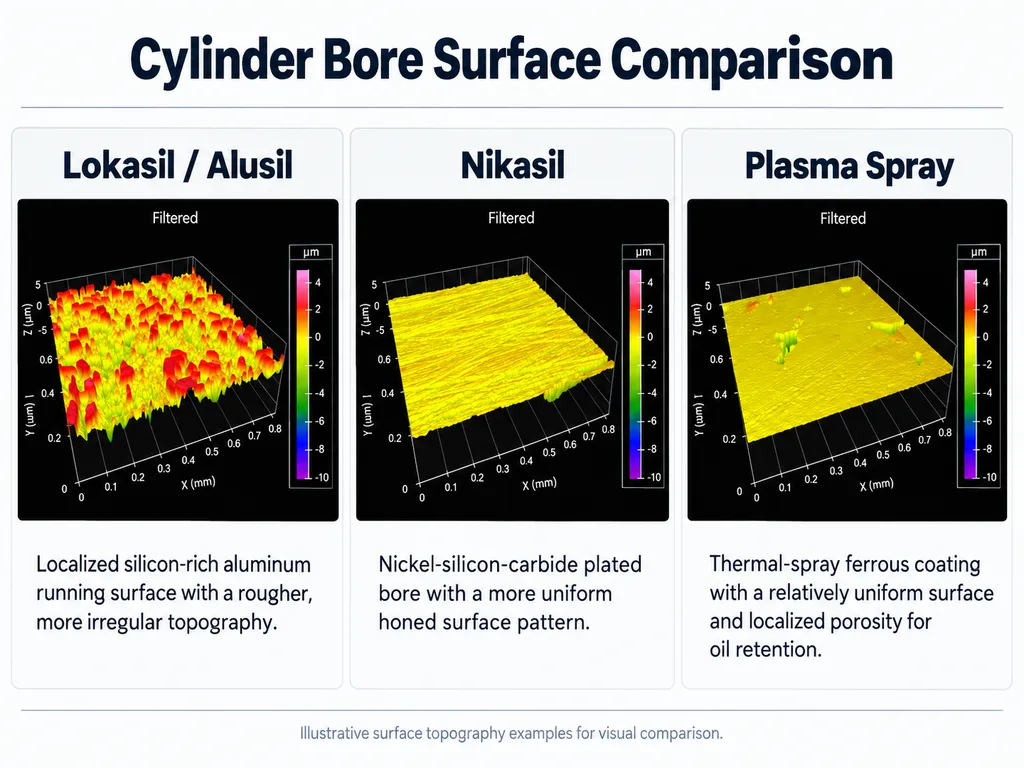
- 2016-on Porsche 911 Carrera (991.2) uses a thermal-spray cylinder-bore coating rather than the earlier Lokasil/Alusil exposed-silicon running surface.
- 2017-on Porsche Panamera Turbo (971) features APS/SUMEbore-type thermal-spray cylinder bores.
- 2019-on Porsche Cayenne Turbo (9Y0) uses APS/SUMEbore-type bore coating technology.
- Later Porsche Macan Turbo and GTS applications use APS/SUMEbore-type cylinder coatings in applicable engine families.
- Later Porsche Panamera GTS applications use APS/SUMEbore-type coated bores in applicable engine families.
- 2019-on Porsche Macan S uses the EA839 V6 with pressed-in cast-iron liners.
- 2019-on Porsche Panamera 4 applications using the EA839 V6 employ iron liners rather than an Alusil running surface.
- 2019-on Porsche Cayenne Base applications using the EA839 V6 employ thin-wall iron liners.
- Porsche 718 Boxster and Cayman engines use later thermal-spray cylinder-bore technology rather than the classic M96/M97 Lokasil system.
- Porsche Macan Base models using the VW/Audi 2.0T iron-block engine are not part of the Alusil/Lokasil bore-scoring group.
The Mezger Engine: A Gold Standard in Porsche Durability
The Mezger-designed flat-six is fundamentally different from the M96/M97 family. Derived from Porsche’s motorsport architecture, it was used in 996 and 997 Turbo, GT2, and GT3 models and uses Nikasil-plated cylinder bores rather than Lokasil. That distinction is important because the classic M96/M97 aluminum-silicon bore-scoring mechanism does not apply in the same way:
- 2001–2005 Porsche 911 Turbo (996) uses the Mezger engine with Nikasil-coated cylinder bores.
- 2002–2005 Porsche 911 GT2 (996) features the Mezger engine with Nikasil-plated bores.
- 1999–2005 Porsche 911 GT3 (996) is equipped with the Mezger engine and Nikasil bores.
- 2006–2009 Porsche 911 Turbo (997.1) continues with the Mezger engine and Nikasil coating.
- 2007–2009 Porsche 911 GT2 (997.1) uses the Mezger engine with Nikasil-lined cylinders.
- 2007–2011 Porsche 911 GT3 and GT3 RS (997.1 and 997.2) retain the Mezger engine with Nikasil bores.
Unlike the M96/M97, the Mezger engine features:
- Robust oiling system with true dry sump scavenging.
- An intermediate shaft design using pressure-fed plain bearings rather than the sealed ball-bearing arrangement associated with M96/M97 IMS failures.
- Nikasil-plated cylinder bores that are not commonly associated with the classic M96/M97 Lokasil bore-scoring failure.
For buyers seeking a water-cooled Porsche that avoids the classic M96/M97 Lokasil cylinder architecture, Mezger-powered cars are an important alternative. Their engineering pedigree, motorsport roots, and long service history have helped them earn a strong durability reputation, although they still require normal age-, use-, and application-specific inspection.
The Shift to Modern Bore Coatings: How Porsche Reduced Bore-Scoring Risk
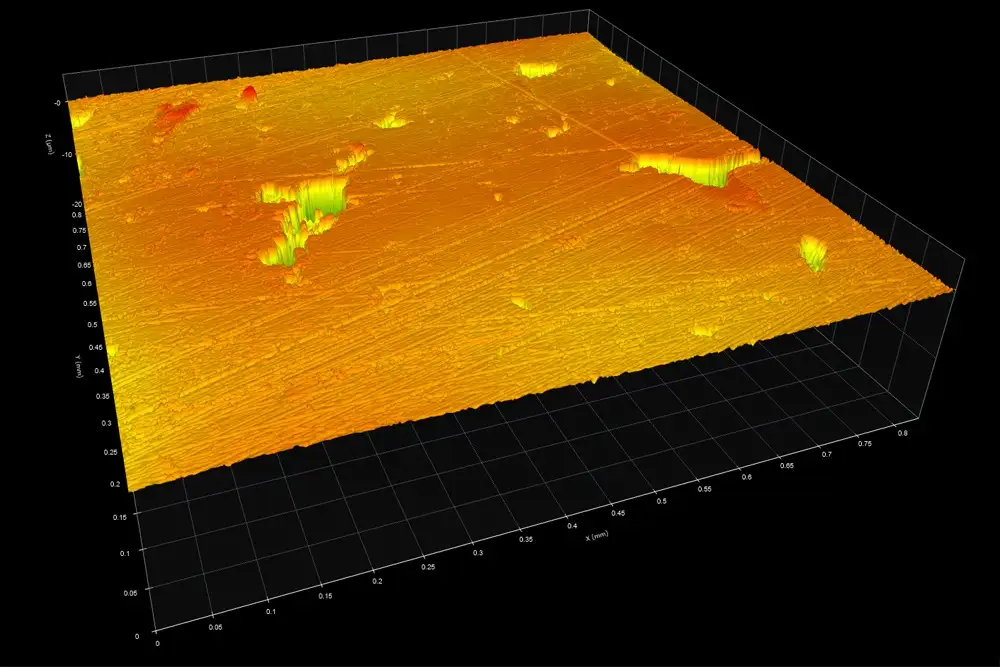
Porsche later adopted advanced thermal-spray cylinder-bore technologies including Plasma Transferred Wire Arc (PTWA) and Atmospheric Plasma Spray (APS). These iron-based coatings allow an aluminum block to retain its low weight and good heat transfer while providing a dedicated wear surface that is fundamentally different from exposed-silicon Lokasil or Alusil. These later systems are generally far less associated with the classic Porsche bore-scoring pattern seen in M96/M97 engines. Examples include:
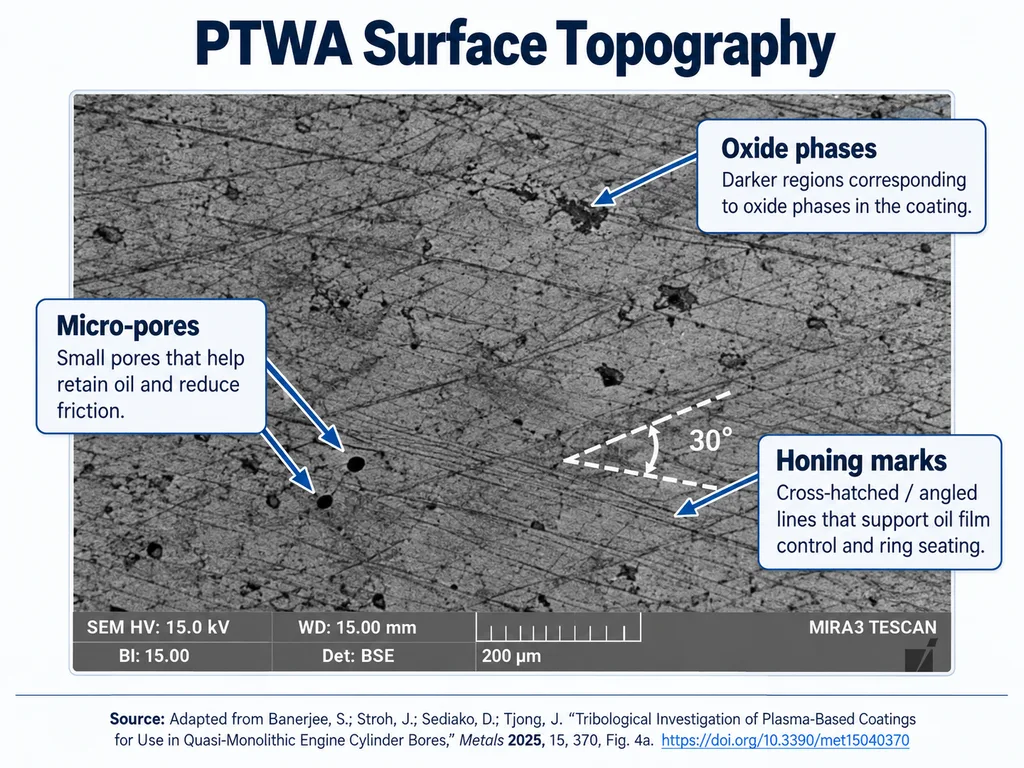
PTWA (Plasma Transferred Wire Arc) is used in later Porsche flat-six and flat-four engine families, including 991.2-era 911 and 718 applications. A honed example of a thermal-spray-coated bore is shown above.
APS / SUMEbore-type coatings are used in selected high-performance VW/Audi-derived V6 and V8 engine families. The EA825 4.0L twin-turbo V8 is one prominent example, appearing in applications such as the Panamera Turbo and later Cayenne and related VW/Audi-group performance models.
EA839 V6 applications such as the later Macan S, Panamera 4, and Cayenne Base also moved away from an exposed Alusil running surface by using iron liners in applicable versions. Thermal-spray coatings themselves can be extremely thin while still providing strong wear resistance and oil retention. These changes are important because they separate newer engine families from the classic Alusil/Lokasil wear mechanism.
In short: newer Porsche engines using thermal-spray coatings or iron liners are generally much less associated with the classic bore-scoring problem than earlier Lokasil M96/M97 engines. The exact cylinder technology should still be identified by engine family and application rather than assuming every newer Porsche uses the same bore construction.
Why Piston Skirt Coatings Matter in Bore Longevity
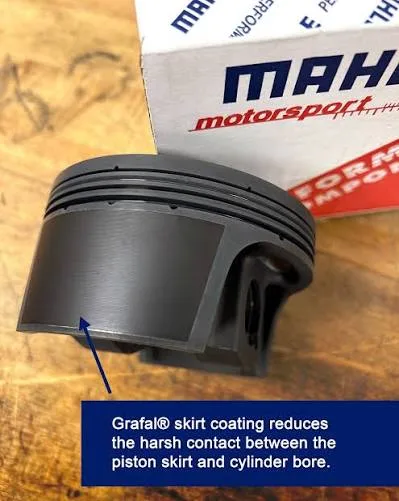
One overlooked but critical element in the bore-scoring discussion is the piston-skirt coating. In Alusil and Lokasil engines, a durable dissimilar skirt surface is required to prevent direct aluminum-to-aluminum contact between the piston and cylinder wall. MAHLE used several ferrous skirt-coating technologies over the years, including Ferrostan and later Ferroprint.
These coatings are not interchangeable. If the protective skirt coating wears through, flakes, or loses adhesion, the underlying aluminum piston can contact the aluminum cylinder matrix directly. That promotes adhesive wear and galling—the failure mechanism owners recognize as bore scoring. LN Engineering’s experience suggests piston design and skirt-coating durability are important reasons why some M96/M97 applications are more susceptible than others.
Thankfully, Nikasil, PTWA, APS, and iron cylinder bores use different running surfaces and piston-coating requirements than Lokasil/Alusil systems. That difference is one reason the classic aluminum-on-aluminum galling mechanism associated with M96/M97 bore scoring does not translate directly to those cylinder technologies. With Nikasil, PTWA, APS, and iron cylinder bores, skirt coatings are not required nor will the cylinder bores score when the coating wears and the aluminum piston contacts the cylinder bore.
Coatings are primarily used here for friction and wear reduction, such as Mahle’s Grafal consisting of an organic resin / polymer matrix embedded with fine graphite particles applied as a permanent anti-friction layer rather than a temporary break-in coating. The ultimate goal for these piston skirt coatings is to extend the life of the engine while reducing fuel consumption. Beyond MAHLE’s Grafal, several other piston skirt coatings are widely used across OEM and performance aftermarket applications, the most common being molybdenum disulfide or dry film lubricants, providing excellent insurance against scuffing during cold starts or transient periods of thin oil film.
Understanding PTWA and APS Coatings: Porsche’s Modern Bore Technologies
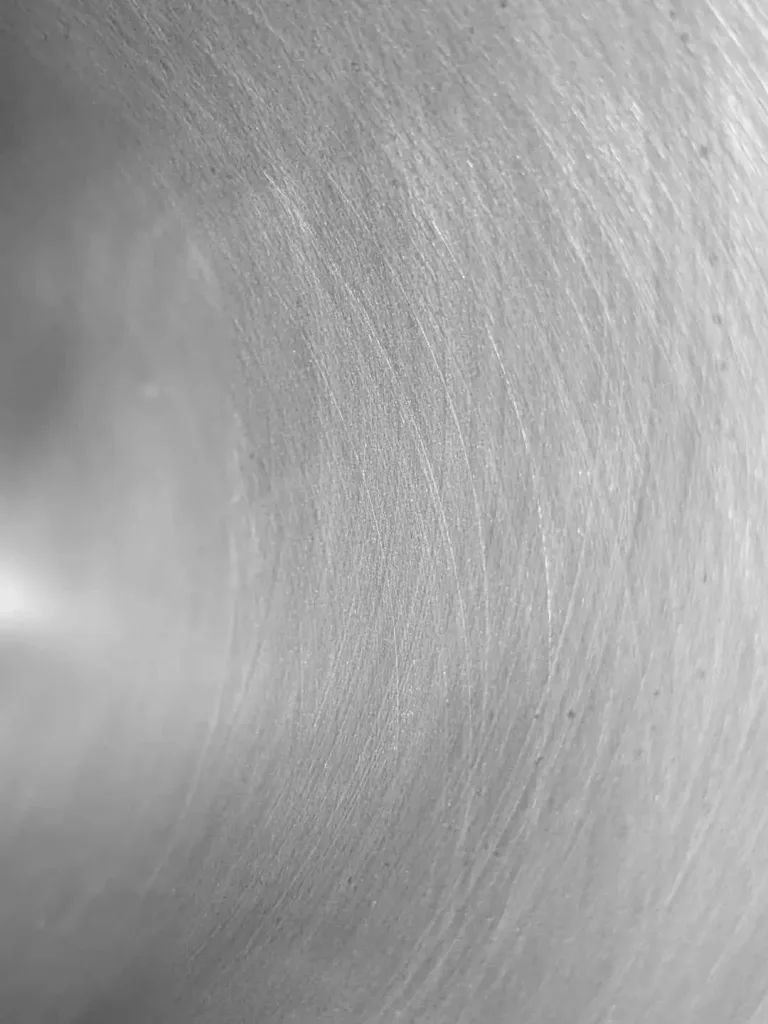
PTWA (Plasma Transferred Wire Arc) is a thermal-spray process that uses wire feedstock—typically iron-based—melted and atomized onto a prepared aluminum cylinder surface. After honing, the coating provides a thin, wear-resistant running surface with controlled porosity for oil retention. Porsche uses thermal-spray cylinder-bore technology in later sports-car engine families, including 991.2-era 911 and 718 applications.
APS (Atmospheric Plasma Spray), including Oerlikon’s SUMEbore family of processes, uses powder feedstock deposited onto a prepared aluminum bore by a plasma-spray process. The finished surface provides a porous, wear-resistant layer that promotes oil retention. APS-type systems are used in selected Porsche and VW/Audi-group V6 and V8 engine families and should be considered a different cylinder technology from Alusil.
Both technologies retain the lightweight and heat-transfer advantages of an aluminum block while providing a dedicated ferrous wear surface. They can support tight piston-to-wall clearances and good oil control, and they are generally far less associated with the classic Lokasil/Alusil bore-scoring failure mechanism. They should not, however, be described as making every later Porsche engine immune to all possible cylinder wear.
For more detail on the failure mechanism, see What Is Porsche Cylinder Bore Scoring?. If you are evaluating a used Porsche, our Porsche Bore Scoping Guide explains when and how to inspect the cylinders, while our Bore Scoring Prevention Guide covers risk-reduction and monitoring practices.