
What is Porsche Cylinder Bore Scoring

What Is Porsche Cylinder Bore Scoring?
What Is Cylinder Bore Scoring in Porsche Boxster, Cayman, and 911 Engines?
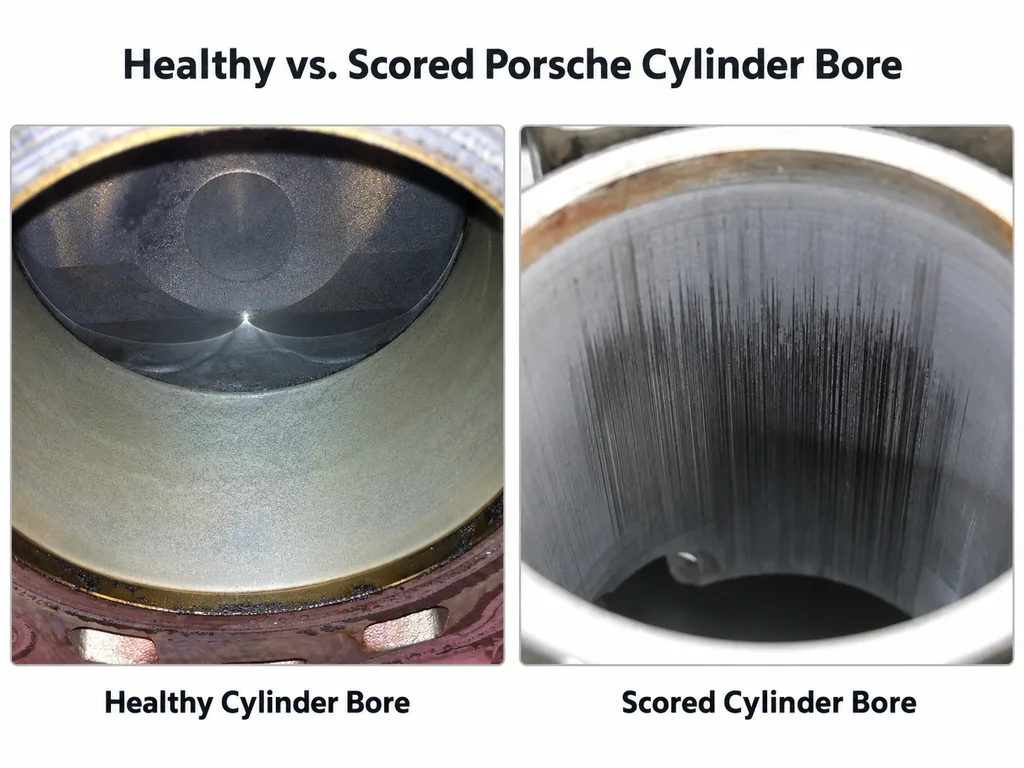
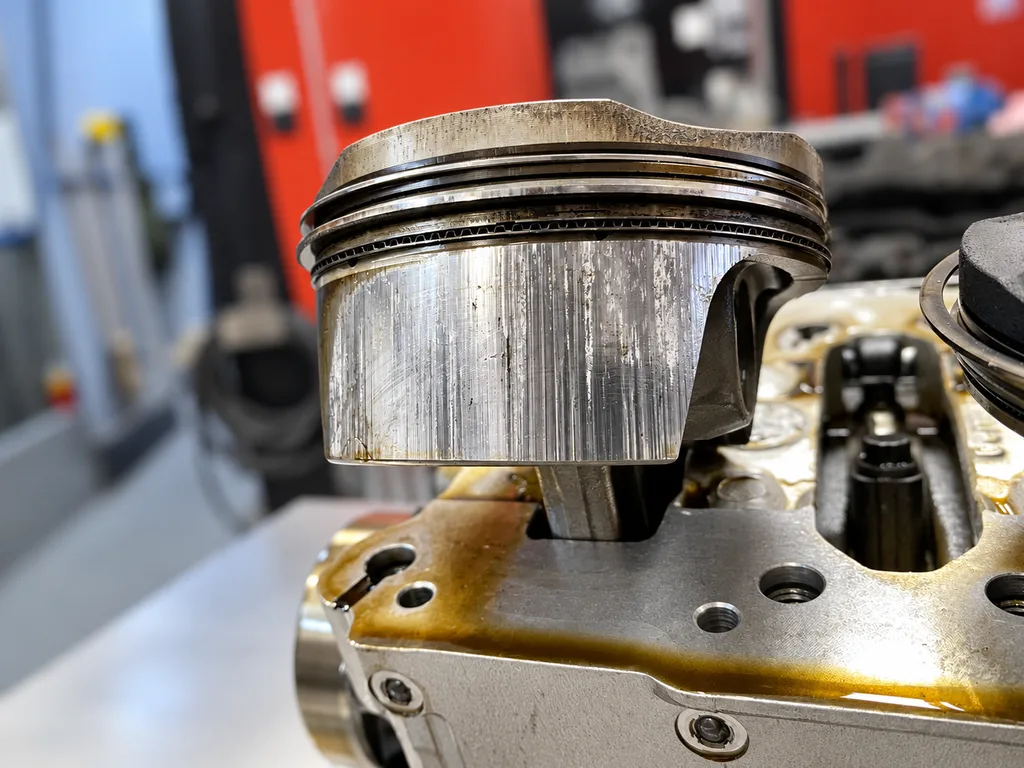
Porsche cylinder bore scoring occurs when there is a breakdown of the aluminum-silicon (Al-Si) cylinder system, resulting in physical damage to the cylinder walls and piston skirts. It is more than a cosmetic scratch in the bore: scoring is a wear failure involving the piston, piston-skirt coating, rings, cylinder running surface, and lubrication system. As the damage progresses, symptoms can include increased oil consumption, piston slap or ticking, reduced ring seal, and eventually the need for an engine rebuild. This type of wear can occur in engines with hypereutectic aluminum cylinder technology such as the Lokasil and Alusil engine blocks used by Porsche and other manufacturers.
In this blog we’re covering:
- What causes Porsche cylinder bore scoring and how the Al-Si cylinder system fails
- How Lokasil and Alusil cylinder-bore technologies work
- Which Porsche 911 engines suffer from cylinder bore scoring?
- Which Porsche Boxster and Cayman engines suffer from cylinder bore scoring?
- Do any other Porsche models suffer from cylinder bore scoring?
- How is Porsche bore scoring confirmed?
- Where can I learn more about Porsche Cylinder Bore Scoring?
How Do Lokasil and Alusil Cylinder Bores Work?
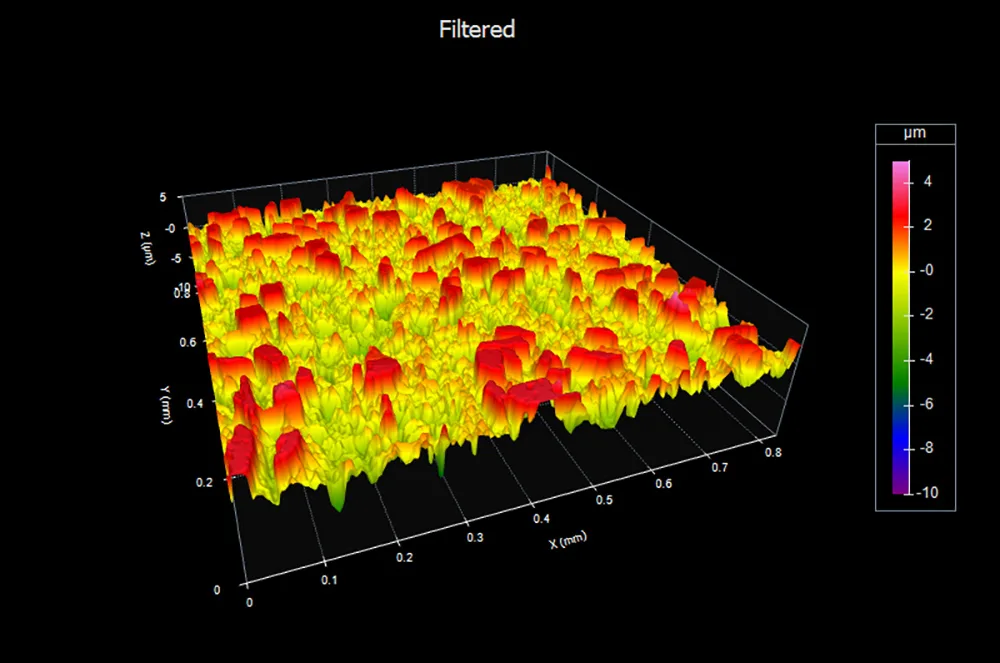
Lokasil and Alusil are aluminum-silicon cylinder technologies that eliminate the need for a conventional cast-iron liner. In these systems, hard silicon particles are exposed at the cylinder surface and support the piston and piston rings, while the surrounding aluminum provides the weight and heat-transfer advantages of an all-aluminum engine block.
Alusil uses a hypereutectic aluminum alloy throughout the casting. Lokasil uses a silicon-rich preform positioned around the cylinder area before the crankcase is cast, creating a localized aluminum-silicon running surface. Porsche used several generations of Lokasil in M96 and M97 engines before returning to Alusil with the MA1/9A1 engine family beginning in 2009.
How Does Porsche Cylinder Bore Scoring Start?
In normal operation, the exposed silicon particles, piston-skirt coating, piston rings, cylinder surface finish, lubricant, and protective tribofilm all work together as a system. The piston-skirt coating is especially important because it helps prevent direct aluminum-to-aluminum contact between the piston and cylinder wall.
When the piston coating is compromised, too many exposed silicon particles are damaged or fractured, or lubrication can no longer keep the surfaces properly separated, the softer aluminum matrix can become exposed. Friction rises, material can transfer between the piston and cylinder wall, and vertical scuffing or scoring can develop. Fuel wash, injector or mixture problems, localized temperature, and operating conditions that reduce oil-film strength can all contribute to this process.
Which Porsche 911 Engines Suffer from Cylinder Bore Scoring?
This section applies to the normally aspirated Porsche 911 Carrera engines using M96 and M97 Lokasil engine blocks from 1999 through 2008. These engines can suffer from cylinder bore scoring, with the larger 3.6 and 3.8 liter versions generally being more commonly affected than the earlier 3.4 liter. Porsche 911 Turbo, GT2, and GT3 models of this era use the Mezger engine with Nikasil-plated cylinders and should not be grouped with the M96/M97 Carrera engines listed below:
- 1999 Porsche 911 996.1 – 3.4 Liter M96.01/M96.02/M96.04 engines
- 2000 Porsche 911 996.1 – 3.4 Liter M96.01/M96.02/M96.04 engines
- 2001 Porsche 911 996.1 – 3.4 Liter M96.01/M96.02/M96.04 engines
- 2002 Porsche 911 996.2 – 3.6 Liter M96.03 engine
- 2003 Porsche 911 996.2 – 3.6 Liter M96.03 engine
- 2004 Porsche 911 996.2 – 3.6 Liter M96.03 engine
- 2005 Porsche 911 996.2 – 3.6 Liter M96.05 engine
- 2005 Porsche 911 997.1 – 3.6 Liter M96.05 & 3.8 Liter M97.01 engines
- 2006 Porsche 911 997.1 – 3.6 Liter M96.05 & 3.8 Liter M97.01 engines
- 2007 Porsche 911 997.1 – 3.6 Liter M96.05 & 3.8 Liter M97.01 engines
- 2008 Porsche 911 997.1 – 3.6 Liter M96.05 & 3.8 Liter M97.01 engines
All base and S Carrera models can suffer from cylinder bore scoring. The 3.6 and 3.8 liter engines used in Porsche 911 996 and 997 models are the most problematic, although the 3.4 liter can also suffer from cylinder bore scoring. The longer-stroke crankshaft used in the 3.6 and 3.8 engines, coupled with the fact that the pistons extend approximately 7 mm out of the bore at bottom dead center versus about 2 mm on the 3.4 liter, likely contributes to the increased side loading and susceptibility seen in these engines. Regardless of model or engine size, the overall scope and cost of cylinder bore scoring repair for 996 and 997 Carrera engines is similar.
Which Porsche Boxster and Cayman Engines Suffer from Cylinder Bore Scoring?
As with the Porsche 911 Carrera, certain Porsche Boxster and Cayman engines with Lokasil engine blocks can also suffer from cylinder bore scoring:
- 2006 Porsche Cayman 987.1 – 3.4 Liter M97.21 engine
- 2007 Porsche Cayman 987.1 – 3.4 Liter M97.21 engine
- 2007 Porsche Boxster 987.1 – 3.4 Liter M97.21 engine
- 2008 Porsche Cayman 987.1 – 3.4 Liter M97.21 engine
- 2008 Porsche Boxster 987.1 – 3.4 Liter M97.21 and M97.22 engines
Unlike the base and S Porsche 911 996 and 997 models, the base 2.5 and 2.7 liter Boxster engines and the base 2.7 liter Cayman engine do not often suffer from cylinder bore scoring. Likewise, cylinder bore scoring in the Boxster S 3.2 liter engine is not very common. We believe this is due in part to the cast piston design and its iron-clad skirt coating, which appears to be more durable than the coating used on the forged pistons found in many 3.4, 3.6, and 3.8 liter applications. The lower expansion rate of the cast piston may also contribute to the durability of the 2.5, 2.7, and 3.2 liter engines.
Do Any Other Porsche Models Suffer from Cylinder Bore Scoring?
Yes. Porsche engines using Alusil cylinder technology can also suffer from cylinder bore scoring, including applications in Boxster, Cayman, 911, Cayenne, Panamera, and Macan models. In LN Engineering’s experience, these engines are generally affected at significantly lower rates than the earlier Lokasil M96/M97 engines, and frequency varies considerably by engine family and application.
Porsche models equipped with Alusil engine blocks that can suffer from cylinder bore scoring include:
Porsche Boxster and Cayman
- 2009–2012 Porsche Boxster and Cayman 987.2 – 2.9 Liter MA1.20 engines
- 2009–2012 Porsche Boxster S, Cayman S, Boxster Spyder, and Cayman R 987.2 – 3.4 Liter MA1.21 engines
- 2013–2016 Porsche Boxster and Cayman 981 – 2.7 Liter MA1.22 engines
- 2013–2016 Porsche Boxster S, Cayman S, Boxster GTS, and Cayman GTS 981 – 3.4 Liter MA1.23 engines
- 2015–2016 Porsche Cayman GT4 and 2016 Boxster Spyder 981 – 3.8 Liter MA1.24 engines
Porsche 911
- 2009–2012 Porsche 911 Carrera 997.2 – 3.6 Liter MA1.02 engines
- 2009–2012 Porsche 911 Carrera S 997.2 – 3.8 Liter MA1.01 engines
- 2010–2012 Porsche 911 Turbo 997.2 – 3.8 Liter MA1.70 engines
- 2012–2016 Porsche 911 Carrera 991.1 – 3.4 Liter MA1.04 engines
- 2012–2016 Porsche 911 Carrera S/GTS 991.1 – 3.8 Liter MA1.03 engines
- 2014–2016 Porsche 911 Turbo/Turbo S 991.1 – 3.8 Liter MA1-series engines
Porsche Cayenne
- 2003–2006 Porsche Cayenne S 955 – 4.5 Liter M48.00 V8 engines
- 2003–2006 Porsche Cayenne Turbo/Turbo S 955 – 4.5 Liter M48.50 V8 engines
- 2008–2014 Porsche Cayenne S/GTS 957 and 958.1 – 4.8 Liter M48.01 V8 engines
- 2008–2014 Porsche Cayenne Turbo/Turbo S 957 and 958.1 – 4.8 Liter M48.51 V8 engines
- 2015–2018 Porsche Cayenne S/GTS 958.2 – 3.6 Liter twin-turbo V6 engines
The Volkswagen-sourced VR6 engines used in base Cayenne models have cast-iron blocks and are not included in this Alusil bore-scoring group.
Porsche Panamera
- 2010–2016 Porsche Panamera/Panamera 4 970 – 3.6 Liter V6 engines
- 2010–2016 Porsche Panamera S/4S/GTS 970 – 4.8 Liter V8 engines
- 2010–2016 Porsche Panamera Turbo/Turbo S 970 – 4.8 Liter twin-turbo V8 engines
- 2014–2016 Porsche Panamera S/4S 970.2 – 3.0 Liter twin-turbo V6 engines
Second-generation 971 Panamera models transitioned to different engine designs and cylinder bore technologies and should not be grouped with the earlier Alusil engines.
Porsche Macan
- 2015–2018 Porsche Macan S 95B.1 – 3.0 Liter twin-turbo V6 engines
- 2017–2018 Porsche Macan GTS 95B.1 – 3.0 Liter twin-turbo V6 engines
- 2015–2018 Porsche Macan Turbo 95B.1 – 3.6 Liter twin-turbo V6 engines
The 2.0 Liter four-cylinder Macan uses a different engine architecture and is not included in this Alusil bore-scoring group. Later Macan V6 engines also transitioned away from the earlier Alusil cylinder-bore design.
Although all of these Alusil engines can suffer from cylinder bore scoring, the frequency varies considerably by engine, displacement, piston design, and application. As with the earlier Lokasil engines, being included on this list does not mean that every engine will develop scored cylinder bores.
Bore scoring is not unique to Porsche. BMW, Mercedes-Benz, and other manufacturers have also used Alusil or similar hypereutectic aluminum cylinder technologies in engines that can experience related cylinder wear or scoring.
Porsche later transitioned many engines away from exposed-silicon Alusil/Lokasil running surfaces to thermal-spray cylinder bore technologies such as PTWA and SUMEbore-type coatings. These newer bore systems use a fundamentally different wear surface and should not be grouped with the earlier Lokasil and Alusil engines when discussing bore-scoring risk or repair methods.
For a broader comparison of engine families that are less commonly associated with this failure, including Porsche engines using Nikasil and later thermal-spray bore technologies, see Porsche Models Without Bore Scoring.
How Is Porsche Bore Scoring Confirmed?
A proper borescope inspection remains the most direct way to confirm cylinder-wall scoring. Oil consumption, piston noise, exhaust appearance, oil-filter inspection, and used-oil analysis can provide supporting information, but none of these by itself proves that the cylinder walls are scored.
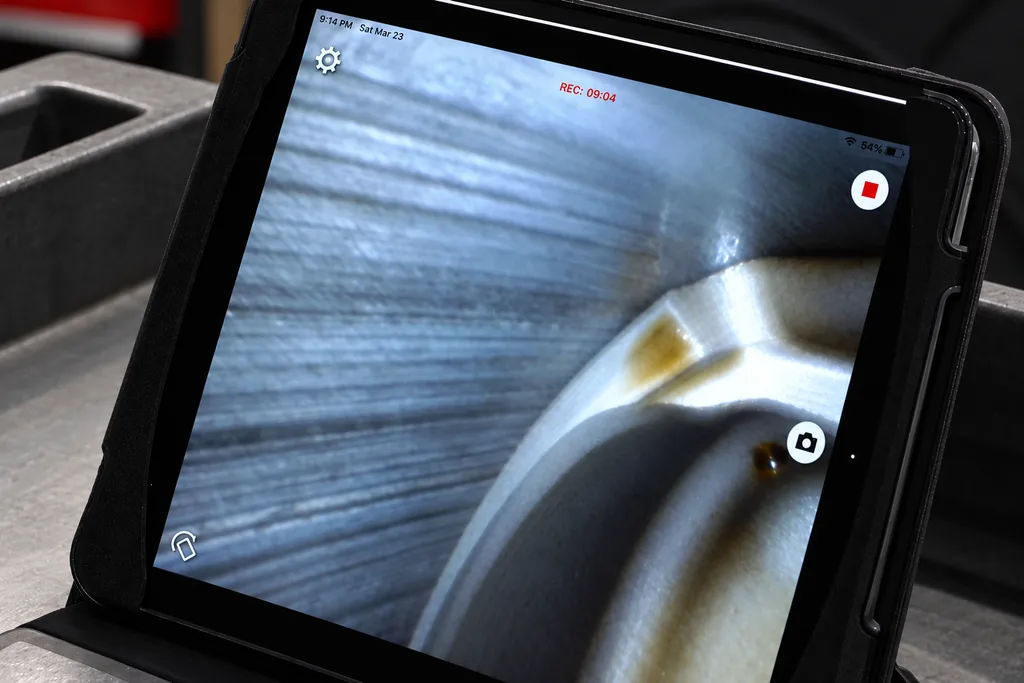
For inspection guidance, see How to Borescope Your Porsche Engine for Cylinder Bore Scoring. For maintenance and risk-reduction recommendations, see Tips on How to Prevent Porsche Bore Scoring. If scoring has already been confirmed, see our Porsche Bore Scoring Repair Costs guide and the main Porsche Cylinder Bore Scoring Guide.
Where Can I Learn More About Porsche Cylinder Bore Scoring?
For those of you who are Porsche Club of America members, PCA published an excellent article written by Carl Spencer, Bore Score and Seven Years Ago, in the February 2019 issue of Panorama. This is a great read for anyone concerned about or experiencing cylinder bore scoring and how to deal with the problem, where Carl Spencer explains the steps he took when his 997 suffered this expensive failure.
The four-part YouTube series from the Porsche Club of America on Porsche Cylinder Bore Scoring covers the following topics:
- What is Porsche Cylinder Bore Scoring
- What Causes Porsche Cylinder Bore Scoring
- How do you Prevent Porsche Cylinder Bore Scoring
- How do you Fix Porsche Cylinder Bore Scoring
Our guide to preventing Porsche cylinder bore scoring covers maintenance and operating practices that can help reduce avoidable wear in Lokasil and Alusil engines. Many of these recommendations also apply to other engines using similar hypereutectic aluminum cylinder technology.
If you own a Porsche Boxster, Cayman, or 911 and are concerned about cylinder bore scoring, borescope inspection of the cylinder walls is usually the best way to confirm whether scoring is present. Porsche bore scoring can produce a characteristic ticking or piston-slap noise that is sometimes misdiagnosed as lifter noise, while sooty exhaust tips and increased oil consumption are other common warning signs.
A research paper published in 2019 by Charles Navarro, titled “Understanding Bore Scoring in Al-Si Cylinder Systems“, discusses Alusil and Lokasil cylinder technologies as well as Porsche Cylinder Bore Scoring in great detail. This is a must read for anyone wanting to learn everything about Cylinder Bore Scoring, whether you own a Porsche or not.
Flat 6 Innovations in conjunction with Rennvision and The Knowledge Gruppe has put out many videos on YouTube on the topic of cylinder bore scoring and how it affects Porsche Boxster, Cayman, and 911 models with the M96 and M97 engines. Check out videos on Porsche Cylinder Bore Scoring now from Rennvision.
We also recommend the LN Engineering YouTube channel, where we publish technical videos on Porsche engine failures, diagnosis, maintenance, cylinder technology, and engine rebuilding.