356 Cylinder and Piston Sets
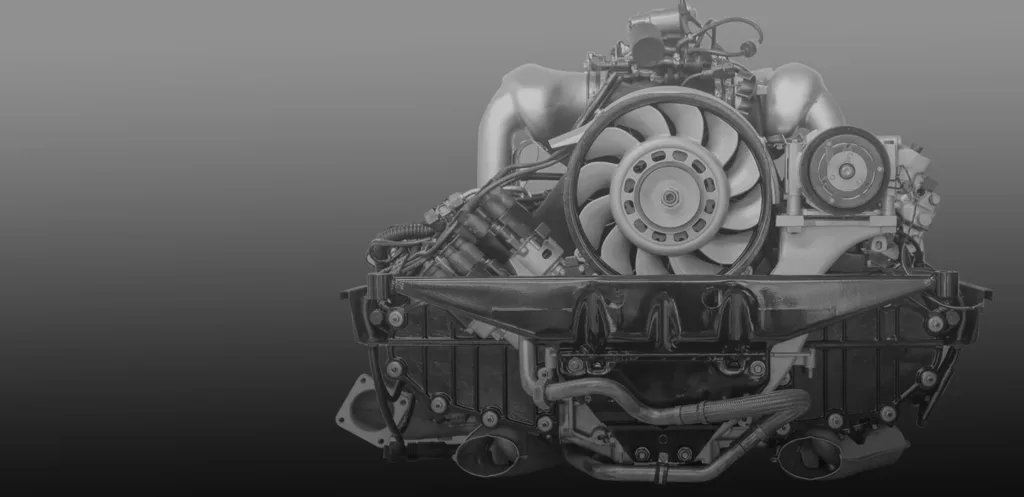
Porsche 356 & 912 Big Bore Piston and Cylinder Kits
Mahle Motorsport + Nickies Piston and Cylinder Sets for Porsche 356 and 912 Engines
Since the introduction of the Porsche 356, Mahle has supplied pistons and cylinders to Porsche as cylinder technology evolved from cast iron, Ferroal, Chromal, and Biral to modern plated aluminum cylinders. Today’s Mahle Motorsport Porsche 356 and 912 piston and cylinder sets combine lightweight 2618 forged Mahle pistons with LN Engineering Nickies billet aluminum cylinders and modern low-tension piston rings. The result is a purpose-engineered big bore kit with improved cooling, reduced friction, excellent ring seal, and long-term durability for street, touring, and performance engine builds.
LN Engineering pioneered the use of billet aluminum, nickel-silicon-carbide plated Nickies cylinders for Porsche 356 and 912 engines and was the first to offer a proven aluminum big bore solution beyond the traditional 1720cc 86mm format. Long before large-displacement 356 engines became commonplace, our Nickies were being used in reliable 1800cc, 1883cc, and larger street and competition engines. That experience ultimately led to the current Mahle Motorsport + Nickies 1720cc and 1925cc piston and cylinder sets offered here.
For more than two decades, LN Engineering has focused on making larger-displacement Porsche 356 and 912 engines not only more powerful, but also more usable and durable. Our goal has never been maximum displacement for its own sake. The objective is to increase torque and horsepower while controlling heat, engine speed, compression, piston weight, ring friction, and cylinder stability so the finished engine remains enjoyable to drive.
Porsche 356 Big Bore Kit Options: 1720cc vs. 1925cc
| Big Bore Kit | Bore | Installation | Best For |
|---|---|---|---|
| 1720cc | 86mm | Slip-fit; no case or head machining required for standard C/SC/912 registers | Stock-appearing rebuilds, top-end repairs, and mild performance upgrades where machining is not desired |
| 1925cc | 91mm | Machine-in; case and cylinder-head registers must be opened for the larger cylinders | Street and performance builds where increased low-rpm torque, displacement, and cooling are priorities |
Both versions use Mahle Motorsport 2618 forged pistons matched to LN Engineering Nickies cylinders. Multiple piston configurations are available to accommodate different combustion-chamber volumes while maintaining the intended compression ratio. The correct piston set should be selected only after the cylinder-head chambers have been measured.
Porsche 356 22-Degree vs. 30-Degree Cylinder Heads
Porsche 356 engines were produced with different piston-dome and combustion-chamber angles. Earlier applications, including many 356 A and B engines and the Super 90, use a 22-degree piston/head interface, while later C, SC, and 912 cylinder heads generally use the 30-degree configuration. The piston crown angle needs to match the cylinder-head chamber so that piston-to-head clearance, squish, compression ratio, and combustion-chamber geometry are correct.
All current Mahle Motorsport Porsche 356 piston sets offered with our Nickies cylinders use a 30-degree piston configuration. If your engine has 22-degree cylinder heads, that does not mean you need to source a different Mahle piston. Our recommended approach is to machine a simple 30-degree chamfer into the cylinder head so the chamber properly accommodates the 30-degree Mahle piston. This is a common and straightforward cylinder-head machining operation and allows the earlier head to be used with the current Mahle Motorsport piston design.
The 30-degree configuration was adopted on later Porsche 356 and 912 engines and provides more room to achieve the desired combustion-chamber and piston-dome relationship as compression and performance increase. Regardless of which head you start with, the combustion-chamber volume should be measured after any machining so the correct piston crown volume and final compression ratio can be selected.
If you are unsure whether your cylinder heads are 22-degree or 30-degree, or whether they have already been modified during a previous rebuild, LN Engineering can inspect and machine the heads as part of our Porsche cylinder head rebuilding and machining services.
Why Go Bigger Than a 1720cc Porsche 356 Big Bore Kit?
The traditional 86mm 1720cc big bore kit has been popular for decades because it adds displacement without requiring machine work. But additional displacement can provide an even more important benefit: a larger engine can make the desired torque and horsepower at lower engine speed. That allows the builder to use a milder camshaft, reasonable compression, and a lower practical redline while still producing substantially more usable power than a smaller-displacement engine.
This is why properly designed 1883cc and 1925cc Porsche 356 and 912 engines can be excellent street engines. Rather than relying on high rpm to make power, the larger displacement increases torque throughout the operating range. Our long-term experience has shown that many street builds can retain properly inspected and reconditioned original C, SC, or 912 crankshafts and connecting rods when the engine combination and rpm range are chosen appropriately.
Our original How to Hot Rod Your Porsche 356 technical article documents the development of these larger Nickies-equipped engines and explains why displacement, camshaft selection, cylinder-head flow, piston weight, cooling, compression ratio, and intended driving style all need to be considered together.
Why Aluminum Nickies for a Porsche 356 Big Bore Engine?
As bore size increases, cylinder construction becomes increasingly important. LN Engineering does not recommend simply increasing displacement with a thin-wall cast iron cylinder and then relying on higher ring tension or additional oil cooling to manage the added heat. Nickies use a solid billet aluminum cylinder with a nickel-silicon-carbide running surface, combining excellent heat transfer with a low-friction, wear-resistant bore.
Our experience with large-bore 356 and 912 engines is one reason we favor aluminum plated cylinders once bore sizes move beyond the small stock-type combinations. Better heat transfer increases the thermal capacity of the engine and helps reduce heat soak into the cylinder heads. Modern low-tension piston rings also reduce friction and heat while improving bore conformity, ring seal, blow-by, and oil control compared with many older big-bore piston and cylinder combinations.
For a deeper technical explanation of the cylinder design itself, see our Porsche 356 and 912 Nickies cylinders page.
High-Performance Engine Kits for Porsche 356 C, SC, and 912 Models
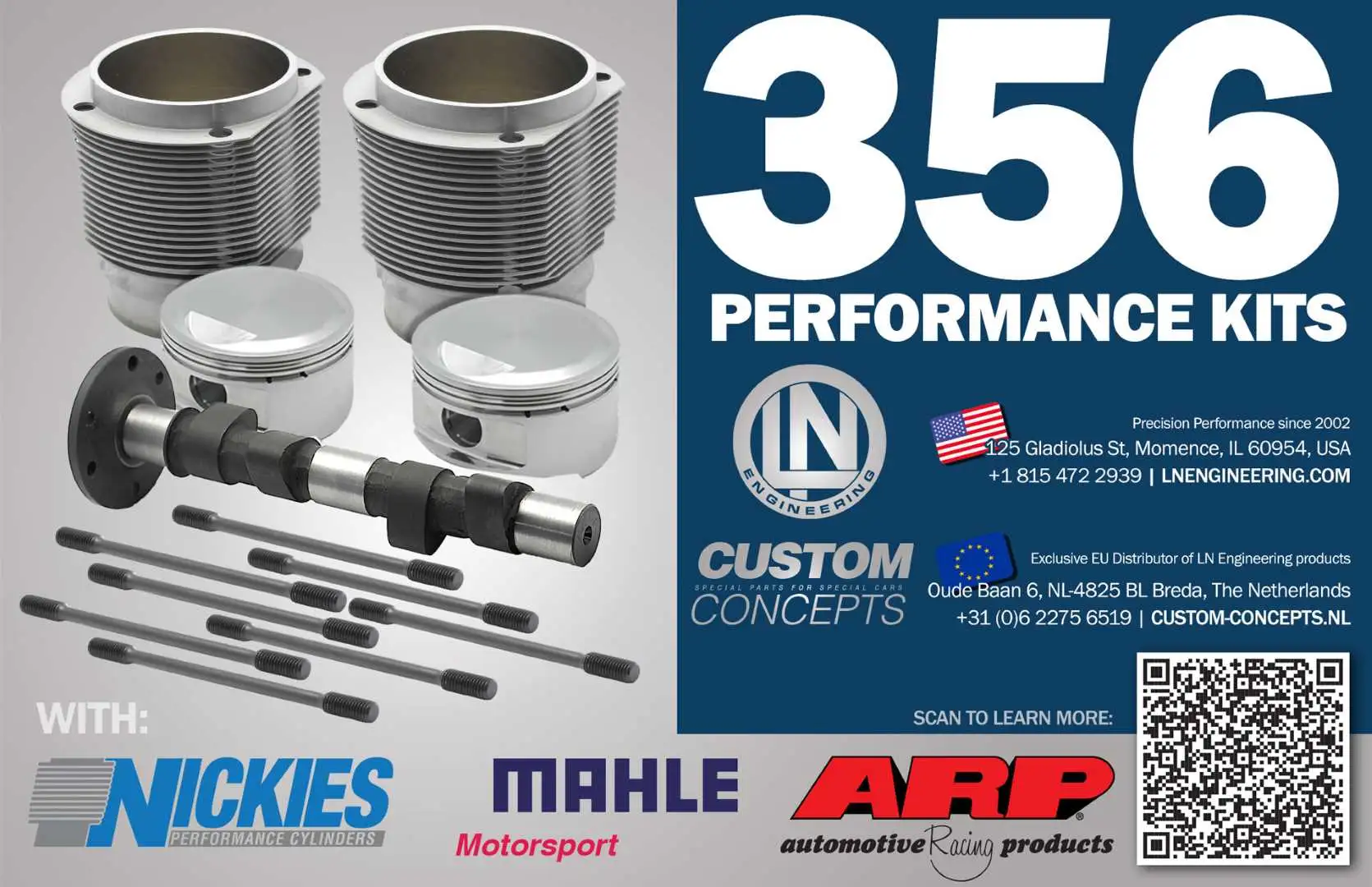
LN Engineering’s Porsche 356 and 912 engine kits are engineered to deliver modern performance while maintaining classic drivability. Designed to work with stock components—including original C, SC, or 912 crankshafts, connecting rods, and Solex or Zenith carburetors where appropriate—our kits provide a proven foundation for street, touring, and performance builds.
Available in 1720cc and 1925cc configurations, these packages use Nickies aluminum cylinders with nickel-silicon-carbide bore plating for cooling and longevity. Mahle Motorsport and CP-Carrillo/Pankl piston options are selected because both manufacturers have extensive OEM and motorsport experience and pair well with the thermal expansion characteristics of Nickies cylinders.
Camshaft selection should match how the car will actually be driven. A street engine that rarely exceeds 5,000 to 6,000 rpm generally benefits more from a camshaft that emphasizes low- and mid-range torque than from a race-oriented profile designed to make power at very high rpm. LN Engineering offers Porsche 356 and 912 Torquer and Performer camshafts specifically matched to these larger-displacement combinations.
For a properly matched 1925cc street combination, the increased displacement can provide very strong torque from low engine speeds while still using conservative rpm and compression. This is a major reason a well-built large-displacement Nickies engine can be both faster and easier on its rotating assembly than a smaller engine that has to be revved harder to make comparable power.
Porsche 356 Cylinder Heads & Machine Work for Big Bore Kits
Head options range from reconditioning original Porsche cylinder heads to performance work on new castings and billet aluminum heads. Larger 91mm machine-in cylinders require the cylinder-head and crankcase registers to be machined for the larger cylinder outside diameter. The added machining is straightforward when performed correctly and allows the larger Nickies cylinders to retain substantial wall thickness and rigidity.
LN Engineering offers Porsche cylinder head rebuilding, CNC porting, and performance cylinder head services as well as Porsche engine machine shop services including case machining, line boring, crankshaft inspection and polishing, connecting rod reconditioning, dynamic balancing, and other work required during a complete 356 or 912 engine rebuild.
Tuning a Porsche 356 Big Bore Engine
A larger-displacement engine should be treated as a complete system rather than a collection of individual performance parts. Carburetor sizing, camshaft, cylinder-head flow, exhaust, ignition timing, compression ratio, and fuel all need to complement one another. Bigger is not automatically better—especially for a street-driven Porsche where throttle response, low-speed torque, cooling, and drivability matter more than a peak horsepower number.
We strongly recommend using a wideband oxygen sensor when tuning any rebuilt or modified carbureted Porsche engine. Proper mixture control is especially important during break-in and under sustained load. For ignition, a programmable distributor such as the 123 Ignition system can make it easier to tailor the advance curve to the engine combination.
Porsche 356 Big Bore Kit FAQ
Does an 86mm 1720cc Porsche 356 big bore kit require machining?
No. The 86mm 1720cc Mahle Motorsport + Nickies sets are slip-fit for the applicable C, SC, and 912-style case and cylinder-head registers, making them a good choice where the builder does not want to machine the crankcase or cylinder heads.
Does a 91mm 1925cc Porsche 356 big bore kit require machining?
Yes. The 91mm 1925cc Nickies are machine-in cylinders. The case and cylinder-head registers must be opened for the larger cylinder outside diameter. This machine-in design allows the cylinder to retain greater wall thickness and rigidity than trying to package the largest possible bore inside the original slip-fit register.
Can a Porsche 356 engine over 1750cc be reliable?
Yes. LN Engineering has been building and supporting large-displacement aluminum-cylinder Porsche 356 and 912 engines for more than two decades. Reliability depends on the entire combination: cylinder cooling and rigidity, piston weight, ring package, compression ratio, camshaft, cylinder-head preparation, ignition and fuel tuning, component condition, and the rpm range in which the engine will be operated. A larger-displacement engine can actually make the desired power at lower rpm, which reduces stress on the crankshaft, rods, bearings, and valvetrain compared with trying to make the same power from a smaller engine at higher rpm.
Can I use 30-degree Mahle pistons with 22-degree Porsche 356 heads?
Yes. The current Mahle Motorsport Porsche 356 piston sets use a 30-degree crown configuration. When used with an earlier 22-degree cylinder head, LN Engineering recommends machining a 30-degree chamfer into the head to provide the correct piston-to-head geometry. The combustion-chamber volume and piston clearance should then be verified before final assembly so the intended compression ratio and minimum clearance are maintained.
What piston and cylinder kit is best for a street Porsche 356 or 912?
If avoiding machine work is the priority, the 86mm 1720cc slip-fit set is the simplest upgrade. If stronger low-rpm torque and greater displacement are the goal, the 91mm 1925cc machine-in set provides a substantial increase while allowing the engine to be built around a mild street cam and conservative rpm. The best choice depends on the condition of the existing engine, cylinder heads, desired powerband, originality goals, budget, and how the car will be driven.
| Image | SKU | Name | Price | Buy: | Stock | hf:tax:product_cat | hf:tax:vehicle-fitment |
|---|